



Algeria is being accused of using the Sahara issue as a political tool to mask its economic struggles.
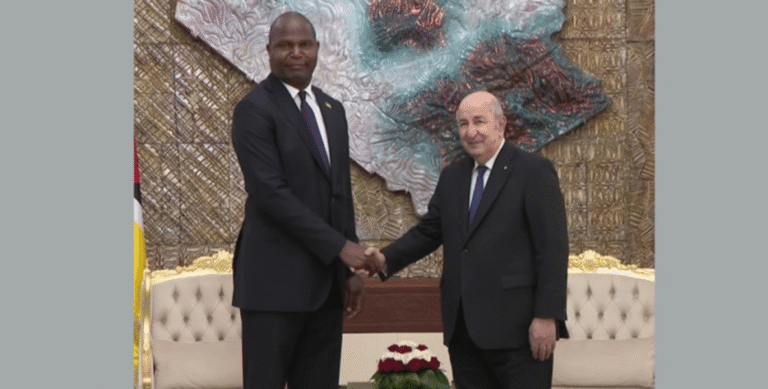
This comes after Mozambican President Daniel Chapo’s visit to Algiers on September 5 and 6, where both leaders praised their “historical ties” and announced new joint projects. Critics, however, argue that these declarations hide the reality of unfulfilled promises and Algeria’s persistent economic challenges.
Algeria’s economy is heavily reliant on oil and gas, and the country is struggling to diversify its revenues. With fluctuating market prices, hydrocarbon revenues are no longer enough to cover budget deficits or address the high unemployment rate among young people. In this context, the government is accused of repeatedly using the Sahara issue as a political and ideological lever. The joint statement released after the meeting with Mozambique placed the territory on the same level as Palestine, confirming its use as a diplomatic tool.
This strategy aims to rally African states to a cause Algeria presents as “sacred,” while at the same time trying to counter Morocco’s growing influence. Morocco has established itself in continental value chains through active economic diplomacy, investing in renewable energy and infrastructure, whereas Algeria is said to be relying on a “memorial diplomacy” that recalls the era of Third Worldism but fails to produce concrete results.
The planned launch of a joint Algerian-Mozambican business council, which has been in the works since 2021, highlights the gap between Algeria’s rhetoric and its actions. Several bilateral agreements signed in recent years in agriculture and energy have stalled, lacking a dynamic private sector and a clear economic strategy to see them through.
By reactivating its African alliances, Algeria is attempting to maintain a central diplomatic role on the continent. However, the repeated focus on the Sahara issue is seen by some as an attempt to distract from the government’s inability to offer a sustainable economic vision.
MK/ac/Sf/fss/abj/APA