





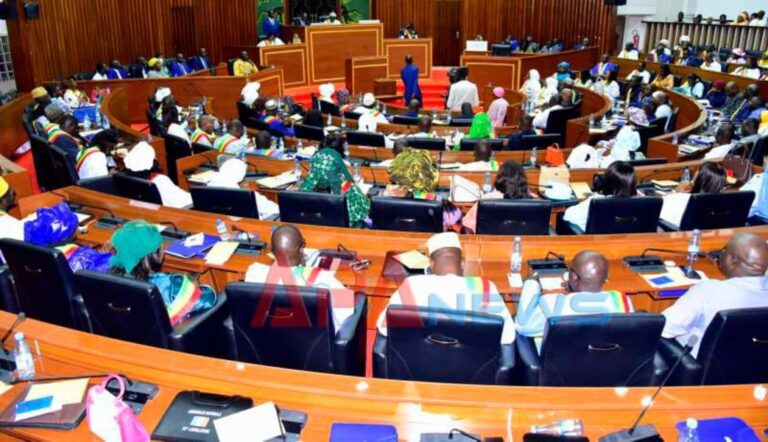
Senegalese parliamentarians have officially adopted Bill No. 05/2026, a significant piece of legislation that amends Article 319 of the country’s 1965 Penal Code regarding so-called “unnatural acts.”
During a plenary session held on Wednesday evening, the measure received overwhelming support, with 138 of the 165 registered deputies voting in favor of the reform, three abstaining, and none voting against it.
Representing the government in the absence of the Minister of Justice, the Minister of the Interior and Public Security, Mouhamadou Bamba Cisse, defended the bill by characterizing it as a necessary evolution of the penal system. According to the Minister, the amendment is designed to better align the country’s legal framework with modern societal realities, improve the protection of vulnerable individuals, and create a more robust legal deterrent against offenses deemed contrary to public morality. He emphasized that the government’s priority is to uphold human dignity and enhance the protection of victims while ensuring the criminal code remains dissuasive.
The legislative process involved extensive deliberation among members from both the majority and the opposition. Throughout the debates, parliamentarians underscored the necessity of balancing the preservation of Senegal’s cultural and traditional values with the need for a clear, effective legal framework to combat delinquency. Key themes addressed during these sessions included the intensification of efforts against sexual violence, the strengthening of child protection mechanisms, and the broader prevention of attacks on human dignity.
Under the new provisions, the reform introduces significantly stricter penalties for the offenses outlined in Article 319, including increased prison sentences and higher fines. Furthermore, the legislation implements more rigorous regulations concerning the use of suspended sentences, thereby narrowing the judiciary’s discretion in these specific cases. The adoption of this bill follows a period of intense public and political debate concerning legal sovereignty and the direction of criminal law in Senegal. Following this parliamentary approval, the bill will now be transmitted to the President of the Republic for formal promulgation, after which it will enter into force as part of the national legal code.
TE/fss/abj/APA