





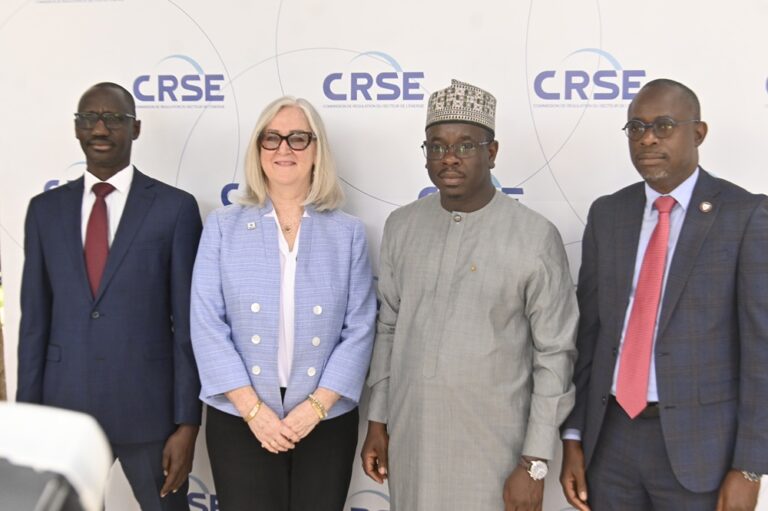
Amid ongoing reforms and transformations in the energy sector, Senegalese authorities, the sector regulator, and development partners have emphasised the need to strengthen the regulatory framework to secure investments and enhance consumer protection.
The Senegalese government intends to make regulation a central lever to stabilise the energy sector, attract investment, and better safeguard consumers, Minister of Energy Birame Souleye Diop stated at the opening of a forum on energy sector governance.
“Regulation should no longer be seen as a barrier, but as a trust-building tool,” said the minister, noting that effective regulation is crucial to achieving universal access to reliable and affordable energy by 2029.
Against the backdrop of the global energy transition and international market volatility, he underscored the regulator’s role in “establishing a sustainable balance between the interests of the state, operators, and consumers,” while providing a stable framework for investors.
Reforms and governance
Ibrahima Niane, Chairman of the Energy Sector Regulatory Commission (CRSE), highlighted reforms undertaken in recent years.
“These changes reflect the public authorities’ commitment to adapting regulation to new realities in the energy sector and to supporting its transformation effectively,” he said.
According to Niane, expanding the regulator’s mandate represents “a significant step in consolidating governance of the sector” and aims to promote “a more transparent, competitive, and efficient energy market.”
However, he noted a major challenge: ensuring that stakeholders fully understand regulation.
“The success of our mission requires a deep understanding of regulatory principles, as well as the rights and obligations they entail,” he said, advocating for “accessible, transparent, and adapted communication.”
Consumers as active participants
Niane also highlighted a key shift in the sector: the rise of the consumer-producer.
“Consumers are no longer just passive users of energy; they are gradually becoming full participants in the energy system,” he explained, citing the growth of self-production.
In response, he called for a clear, transparent, and stable framework to foster innovation while maintaining system balance.
Oumar Diop, Director General of Millennium Challenge Account Senegal II, emphasised that regulatory reform is a pillar of sector transformation.
“Sustainable development of the energy sector depends not only on structural investments but also on a robust, transparent, and effective institutional framework,” he said.
He added that reforms strengthening the regulator’s mandate “mark an important milestone in consolidating the regulatory system,” now extended across multiple segments of the energy sector.
For Diop, “effective regulation is not limited to producing norms; it also requires clear, inclusive, and accessible communication so that every stakeholder understands their rights and obligations.”
All participants agreed on the need for more participatory governance. The forum, which brings together institutions, operators, and partners, serves as a platform for “sharing best practices” and “identifying concrete solutions” to sector challenges.
Minister Diop reaffirmed the government’s commitment to support the regulator in fulfilling its mandate, aiming to promote “sustainable, transparent energy development that prioritizes the needs of users.”
ARD/ac/lb/as/APA