





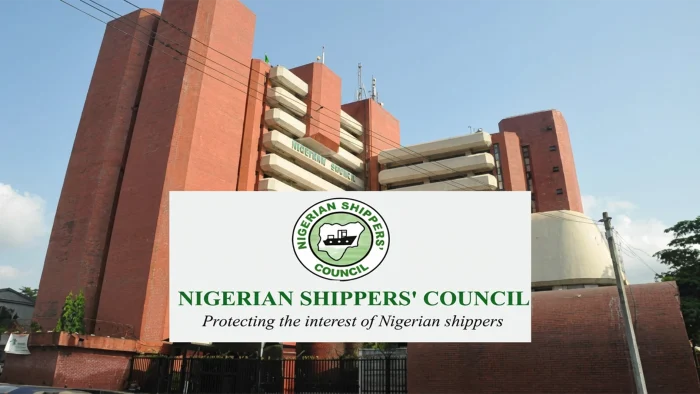
The Nigerian Shippers’ Council (NSC) says that it saved over N90.60 billion and $1.348 million in economic value for Nigerian shippers and the national economy through its Alternative Dispute Resolution (ARD) and regulatory interventions between the fourth quarter of 2023 and the second quarter of 2026.
The Executive Secretary of the NSC, Dr Pius Akutah, told maritime journalists on Saturday that the council prevented N86.06 billion unjustified demurrage payments and secured a savings of N4.54 billion and $1.348 million.
According to Akutah, the Council received 558 complaints and resolved 295 cases with disputes covering container deposits, demurrage, detention charges, terminal charges, cargo claims, export fraud and related commercial matters.
He disclosed that the Council concluded out-of-court settlements involving APM Terminals Nigeria Limited, CMA CGM and Maersk Nigeria Limited in matters arising from charges paid above the approved tariffs.
These interventions, he explained, protected Nigerian shippers, reduced litigation and reinforced confidence in the Council’s dispute resolution framework.
“Alternative Dispute Resolution remains one of the Council’s most effective mechanisms for protecting Nigerian shippers and reducing the cost of doing business,” he said.
He added that the Council also achieved major institutional milestones, including the passage of the Nigerian Port Economic Regulatory Agency (NPERA) Bill by both Chambers of the National Assembly, approval of its statutory funding mechanism through the 2025 Appropriation Act, active participation in the National Single Window Project and resolution of key issues delaying implementation of the International Cargo Tracking Note (ICTN).
According to him, these reforms are improving regulatory certainty, reducing the cost of doing business and supporting the Federal Government’s vision of building a $1 trillion economy by 2030.
He explained that once the Bill is assented to, the legislation will establish an independent Port Economic Regulator with enhanced powers to regulate tariffs, service standards, competition and commercial conduct, thereby strengthening transparency and investor confidence across the port industry.
Akutah further noted that outstanding issues delaying the implementation of the ICTN have been resolved, adding that once operational, it will strengthen cargo visibility, improve trade intelligence, enhance supply chain security and support regulatory compliance.
Akutah reiterated that the Council has continued to promote fairness, transparency and efficiency in port operations through effective economic regulation and consumer protection.
He said during the period under review, the Council reviewed and approved tariff requests for shipping companies, terminal operators and Inland Dry Ports after rigorous regulatory assessment.
Akutah said the Council also continued to confirm the reasonableness of freight rates, charter party fees and vessel demurrage for foreign exchange transactions, as well as freight charges on export cargoes, thereby supporting transparency and helping to curb capital flight.
To improve pricing transparency, he said terminal operators were directed to publicly display approved tariffs, while shipping companies were required to establish holding bays outside the ports to facilitate the return of empty containers and reduce congestion along port access roads.
He stressed that the Council also abolished unauthorised surcharges introduced by some shipping lines and developed minimum service standards for shipping companies and terminal operators.
He added that the Council also facilitated a landmark Collective Bargaining Agreement between the Maritime Workers’ Union of Nigeria and employers in the shipping industry, resulting in a new N200,000 minimum wage for junior workers after almost two decades of negotiations.
He disclosed that discussions on an agreement for senior staff are at an advanced stage.
Akutah said that the Council continues to promote an integrated multimodal transport system through the development of Inland Dry Ports, Vehicle Transit Areas and Border Information Centres.
He also stated that operational Inland Dry Ports in Kaduna, Kano and Funtua have continued to improve cargo movement, support customs operations and stimulate economic activity in inland regions.
Looking forward, Akutah said that the Council would continue to deepen port economic regulation, strengthen consumer protection, accelerate digital transformation, expand trade facilitation infrastructure and promote multimodal transport.
“The Council is entering a new phase of institutional growth. Our focus is not only to regulate the port environment, but to help build a more transparent, competitive and investment-friendly maritime economy that delivers measurable value to businesses, consumers and the nation,” he added.
GIK/APA