



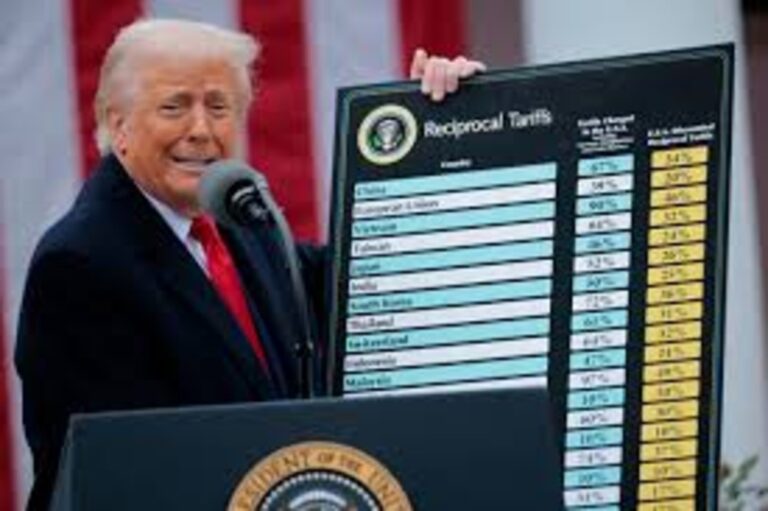
South Africa is scrambling for a response following the United States’ announcement of a sweeping 30 percent tariff on all South African exports set to take effect 1 August.
The move, signed into law by President Donald Trump on Monday, has triggered alarm across government, industry and diplomatic circles.
President Cyril Ramaphosa’s office confirmed receipt of the formal communication from Washington, describing the tariff as based on a “contested interpretation” of the balance of trade between the two countries.
According to South Africa’s calculations, 77 percent of US goods enter the African country duty-free, with an average import tariff of 7.6 percent, far below the reciprocal rate now imposed by the US.
“Accordingly, South Africa maintains that the 30 percent reciprocal tariff is not an accurate representation of available trade data,” the Presidency said on Wednesday.
It said the latest move by the Trump administration was premature, given that negotiations are ongoing, with a framework deal submitted to the US in May addressing concerns over trade imbalances, market access and strategic procurement.
“We welcome the commitment by the US government that the 30 percent tariff is subject to modification at the back of the conclusion of our negotiations with the United States.”
Meanwhile, South Africa’s Parliamentary Select Committee on Economic Development and Trade, chaired by Sonja Boshoff, has warned of a severe economic fallout if the new US tariff regime is implemented.
Key sectors such as citrus, macadamia, automotive components, steel and aluminium face immediate risk, with Boshoff noting that the citrus industry alone supports over 35,000 jobs and contributes R38 billion annually.
“These industries are not abstract economic indicators; they are lifelines for tens of thousands of workers, particularly in rural and small-town South Africa,” Boshoff said in a statement.
She called for swift diplomatic action, urging the government to dispatch a high-level delegation to Washington and finalise a sustainable trade path.
“We cannot afford diplomatic dithering. Every delay will deepen the uncertainty in our export industries. The government must urgently finalise a sustainable trade path with the United States,” Boshoff said.
She also pressed for support packages for affected industries, including logistics relief, export finance and market diversification strategies, particularly for emerging farmers and small to medium enterprises.
The tariff order follows the withdrawal of US grant funding for key South African programmes and comes amid broader tensions over trade reciprocity and BRICS alignment.
Trump has warned that any retaliatory tariffs from South Africa will be met with further hikes.
With the clock ticking toward the August deadline, Ramaphosa has instructed trade teams and exporters to accelerate diversification efforts to bolster resilience in global supply chains.
JN/APA