



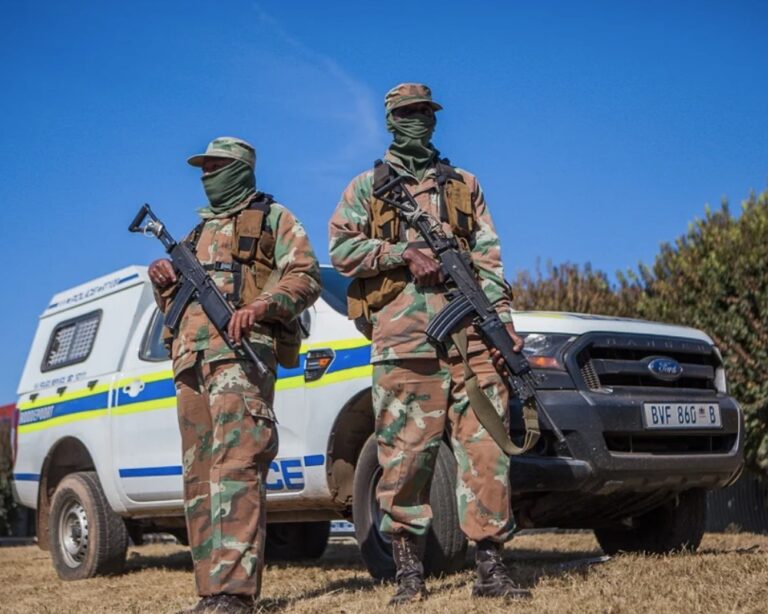
South African authorities have stepped up security measures ahead of Wednesday’s local government elections, deploying law enforcement personnel to identified hotspots across all nine provinces and placing the army on standby should security threats emerge during the vote.
The National Joint Operational and Intelligence Structure (Natjoints) said extensive preparations were in place to safeguard the electoral process, including increased police visibility, specialised response units and intelligence-led deployments tailored to varying levels of risk at voting stations.
Natjoints coordinator Tebello Mosikili told journalists on Sunday that voting stations had been classified as high-, medium- or low-risk based on security assessments and intelligence reports.
“We have categorised the hotspot areas within all nine provinces and put measures in place in accordance with the intelligence brief that we got on how to police those particular hotspot areas,” she said.
According to Mosikili, deployment levels have been determined for each category of voting station, with additional resources allocated where the threat of disruption is assessed to be highest.
She said sufficient law enforcement personnel had been deployed nationwide, including members of the South African National Defence Force, while roving operational teams and specialised police units remained on standby to respond swiftly to incidents that could threaten the smooth conduct of the elections.
Mosikili said the SANDF would provide support to law enforcement if required, particularly in areas identified as hotspots.
Although South Africa’s elections are generally regarded as free and fair, authorities have historically heightened security around voting periods due to concerns over political violence, service-delivery protests, community unrest and criminal activity that could affect voter turnout or disrupt electoral operations.
In recent years, some municipalities have experienced election-related tensions linked to fierce competition for council seats, intra-party disputes and localised protests over governance and service delivery issues.
The local government elections will determine the composition of municipal councils responsible for delivering essential services such as water, sanitation, refuse collection, roads and local infrastructure.
Political parties and independent candidates are contesting seats across the country in what is seen as an important test of support at the grassroots level.
JN/APA