





Friday marks 1,000 days since Sudan descended into armed conflict, leaving lives and whole communities shattered, and causing the world’s largest humanitarian crisis.
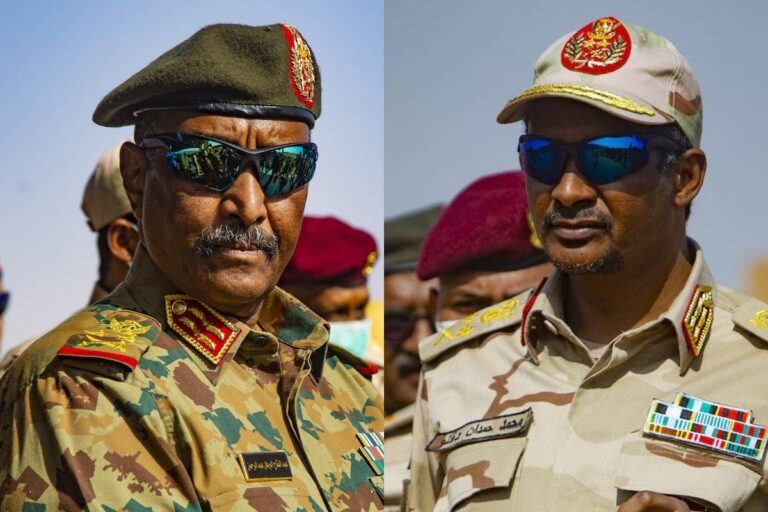
What began as a deadly power struggle between the Sudanese Armed Forces (SAF) strongman Abdel Fattah al-Burhan and the Rapid Support Forces (RSF) leader Mohamed Hamdan Dagalo or Hemati in Khartoum and nearby cities quickly spiraled out of control and consumed the whole country.
Almost three years on, the world continues to witness a full-scale humanitarian disaster in Sudan, marked by mass displacement, famine-level hunger, and widespread violence.
Estimates put the numer of people who had died since the conflict began at over 100, 000 including those who perished from war-induced famine and a collapse of the country’s health systems, sanitation and water networks, giving rise to disease outbreaks which swept through overcrowded displacement sites.
According to the International Red Cross, humanitarian needs are far outstripping resources as a dearth in international funding and lack of access to destittute communities threaten more victims.
Bob Kitchen, IRC’s Vice President of Emergencies, who recently visited Darfur one of the enduring flashpoints of renewed hostilities said ”one thousand days of war is one thousand days of failure”.
He said while driving 50 hours across war-ravaged Darfur, he had witnessed a stark convergence: streams of people fleeing conflict and convoys of humanitarian aid moving toward one another through a landscape of difficulty and violence.
”I watched families fleeing south with whatever they could carry—and at the same time saw our teams grinding north through mountain passes to meet them with health care, clean water, and cash assistance” he said.
“El Fasher, once home to more than 1 million people, has become a grim emblem of Sudan’s descent. Those who were able to flee to Tawila have described to IRC aid workers large-scale sexual violence, executions, forced recruitment, and children separated during escape routes.
He also experienced similar scenes of horror in Tawila, Zalingei, and El Geneina which the world may never see.
Kitchen’s IRC is one of the main providers of lifesaving services in these areas, supporting more than half a million people who have been displaced as a result of incessant violence.
He said the world must be seized of the disaster unfolding in Sudan as it reaches a catastrophic milestone, in which civilians are paying the highest price for a conflict they did not choose.
He called for decisive action from the international community, to end the conflict and guarantee humanitarian access to those desperately in need.
The IRC has released what it calls an emergency watchlist highlighting a “New World Disorder,” in which warring parties and regional backers continue to benefit from conflict, repeatedly fractured diplomacy failing to secure ceasefires, U.N. Security Council vetoes and fragmented mediation efforts and humanitarian funding dwindling by 50%, leaving millions without the assistance required to survive.
WN/as/APA