





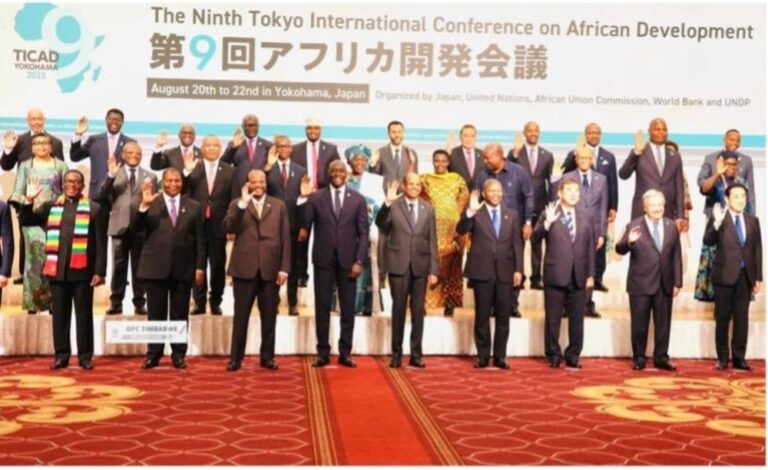
As the curtain came down on the 9th Tokyo International Conference on African Development (TICAD9) in Yokohama last Friday, questions linger over whether African nations approached the summit with a unified strategy or whether the outcomes risk undermining the continent’s long-standing integration ambitions.
The three-day summit, co-hosted by Japan and global institutions such as the United Nations and the African Union, ended with the adoption of the Yokohama Declaration.
The communique reaffirmed support for multilateral trade and outlined plans to deepen ties between Africa and the Indo-Pacific region, aligning with Japanese Prime Minister Shigeru Ishiba’s new economic initiative.
While the declaration emphasized industrial cooperation, human resource development and private-sector investment, critics argue that the bilateral approach – marked by Ishiba’s 34 separate meetings with African leaders – may have reinforced fragmented engagement rather than continental cohesion.
Since its inception in 1993, TICAD has positioned itself as a multilateral platform rooted in African ownership and international partnership.
Yet the structure of TICAD9, with its emphasis on bilateral diplomacy and country-specific investment pledges, has reignited debate over whether such forums serve Africa’s integration goals or dilute them.
“The optics of 34 one-on-one meetings suggest a divide-and-engage strategy rather than a collective African front,” political analyst Ronald Porusingazi said.
“It’s hard to see how this format strengthens the African Continental Free Trade Area or supports Agenda 2063’s vision of a unified, prosperous continent.”
Japan’s approach, often contrasted with China’s infrastructure-heavy model, focuses on co-creation and tailored solutions.
Prime Minister Ishiba stressed the importance of understanding each country’s unique needs, but Porusingazi expressed concern that this could sideline regional institutions and continental frameworks.
The African Union’s Agenda 2063 and its Second Ten-Year Implementation Plan call for deeper regional integration, harmonised policies and pan-African infrastructure.
Yet TICAD9’s outcomes, while aligned with development goals, appear to prioritise bilateral cooperation over regional coordination.
The question remains: do summits like TICAD empower African nations through diversified partnerships or do they perpetuate a divide-and-rule dynamic where external powers engage selectively to advance their own strategic interests?
“While Japan announced a $5.5 billion collaborative framework with the African Development Bank to support youth, women and regional connectivity, the lack of a unified African negotiating bloc at TICAD9 may limit the continent’s leverage in shaping such initiatives,” Porusingazi added.
The analyst noted that as global powers compete for influence in Africa, the continent’s leaders face a strategic choice – whether to engage individually for short-term gains or collectively to advance long-term integration.
“TICAD9 offered both opportunities and contradictions. Whether it strengthens Africa’s continental agenda or scatters it across bilateral tracks will depend on what happens next.”
JN/APA