



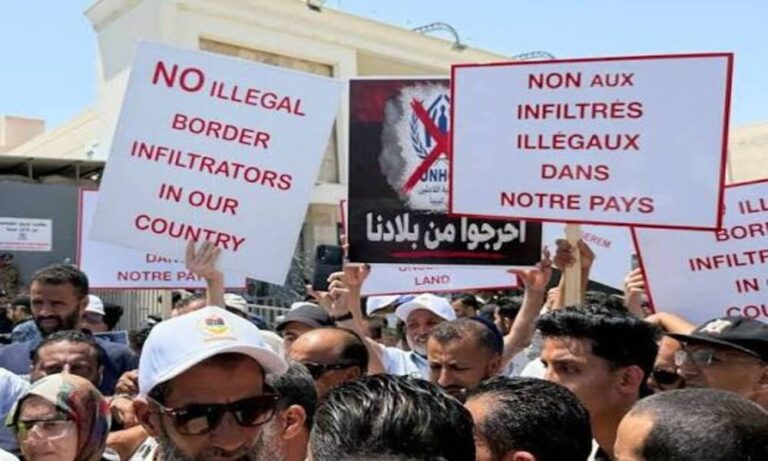
Protesters blockaded the headquarters of the International Organization for Migration (IOM) in Tripoli amid rising tensions over the management of irregular migration in Libya.
On Tuesday, demonstrators blocked access to the IOM office in Tripoli to protest the country’s migration policies and what they consider attempts to resettle migrants within Libya.
According to local media reports, several protesters gathered outside the organization’s offices, erecting earthen barriers to prevent access to the building. The protesters chanted slogans rejecting any permanent settlement of migrants in Libya and demanding the return of undocumented migrants to their countries of origin.
This mobilisation is part of a wave of protests that has been ongoing for nearly two weeks in several Libyan cities. The protests reflect growing public concern about the increasing number of migrants in the country and the perceived consequences for security, employment, and public services.
Faced with this criticism, the Prime Minister of the Government of National Accord (GNA), Abdul Hamid Dbeibeh, recently rejected accusations of a plan to resettle migrants in Libya.
He stated that the authorities were continuing repatriation and deportation operations within their means, while emphasizing the need for greater international support to manage migration flows.
The incident comes just days after protests targeting the offices of the United Nations High Commissioner for Refugees (UNHCR) and the United Nations Support Mission in Libya (UNSMIL) in the capital.
These actions illustrate the growing sensitivity of the migration issue in a country that remains one of the main transit points for migrants seeking to reach Europe via the Mediterranean.
Meanwhile, several human rights organisations have expressed concern about the rise in anti-migrant rhetoric.
They have warned of the risk of incitement to violence and reported alleged cases of assault and ill-treatment.
These organisations call on the authorities and international actors to address migration issues in accordance with legal and humanitarian frameworks, while also responding to the security and socio-economic concerns expressed by a segment of the Libyan population.
MK/AK/Sf/fss/gik/APA