



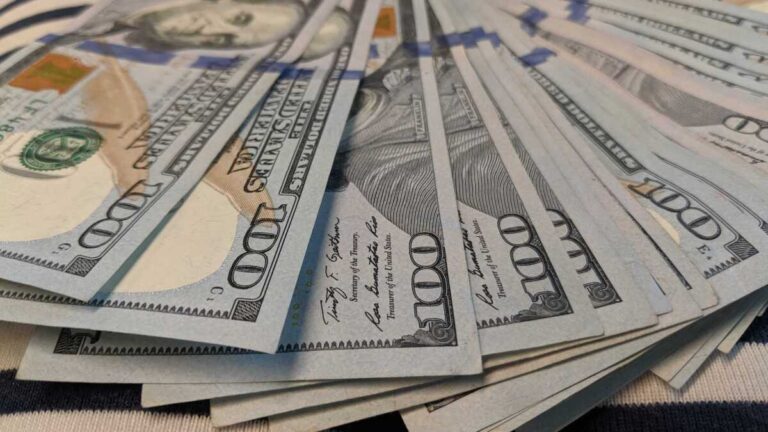
The planned authorization for Tunisian residents to freely open foreign currency accounts, included in the draft 2026 Finance Bill, is generating deep concern and a financial expert is warning of a major risk to the stability of the dinar and the country’s monetary equilibrium.
Larbi Benbouhali, an international finance expert, cautioned in an analysis relayed this weekend against the decision announced in the 2026 Finance Law to allow Tunisians to freely open foreign currency
bank accounts.
He considers the measure “risky, if not dangerous,” given a context marked by a weakened dinar, persistent deficits and a still fragile financial system.
According to Benbouhali, this opening effectively amounts to a “de facto liberalization of the capital account,” a step that even major economies approach with caution.
Benbouhali notes that he is not opposed to the reform of the exchange framework, recalling that he himself has argued for the modernization of the 1976 law, financial inclusion, and the expansion of mobile banking.
He highlights that 65% of Tunisians do not have a bank account, a situation that maintains the opacity of an informal economy representing nearly 35% of GDP.
He believes that before any liberalization, the priority should be to include citizens in the formal financial system.
According to the expert, allowing millions of residents to freely hold, buy, or keep foreign currencies would create massive pressure on the country’s reserves.
He cites the example of China, where foreign currency accounts remain strictly regulated, with annual limits and rigorous control of operations. “Even major powers do not allow currencies to circulate without safeguards,” he said.
The Tunisian context makes the operation even more delicate: a structural trade deficit, high dependence on imports, persistent inflation, and the continuous slide of the dinar.
In such an environment, the demand for foreign currency would mechanically increase. Benbouhali warns that a massive movement to buy euros or dollars could lead to a “rapid and uncontrolled depreciation” of the dinar, as banks would themselves have to procure foreign currency on international markets to satisfy their clients.
He recalls that comparable countries, such as Egypt, Libya, and Algeria, have seen their currencies depreciate by 11% to 55% despite having substantial reserves. Tunisia, with its much narrower financial margins, would be exposed to an immediate shock.
The expert stresses that foreign currency accounts should not be abolished; they remain necessary for exporters, technology companies, and Tunisians receiving income from abroad. The performance of companies like Instadeep, Vermeg and Telnet attests to this.
For Benbouhali, Tunisia “is not ready” for total liberalization. Such a measure could only be considered within five years, provided the banking system gains efficiency, the economy strengthens and foreign currency reserves cover at least 200 days of imports.
Until then, he insists the Central Bank must maintain strict controls to protect the dinar, stabilize prices, and avoid a monetary crisis with potentially severe consequences for households and businesses alike.
MK/ak/ac/sf/lb/gik/APA