






Algeria’s Foreign Ministry has denounced what it called French “visa blackmail,” summoning the chargé d’affaires of the French Embassy in Algiers in the latest diplomatic flare-up with Paris.
In a sharply worded statement, the ministry accused French authorities of managing Algerian ordinary passports “through blackmail, bargaining and intimidation.” The combative tone, designed to shift blame onto Paris, reflects a pattern of victimhood already observed in previous disputes, from the suspension of the 2013 bilateral agreement to tit-for-tat expulsions of diplomats.
The French embassy on Tuesday announced that its consular staff would be cut by one-third starting September 1, after Algeria refused to accredit most of its diplomatic personnel. The immediate consequence will be fewer visa appointments — a measure that will primarily affect Algerian citizens seeking to travel.
Rather than acknowledging its own role in the impasse, fueled by its restrictive accreditation policy, Algiers accused France of “violating” the Vienna Convention and claimed Paris was the instigator of the standoff.
The Algerian government has invoked “reciprocity,” alleging that France has blocked the appointment of its diplomats for the past two years. But behind this rhetoric, Algeria appears locked in a cycle of confrontation that further strains its already fragile foreign relations.
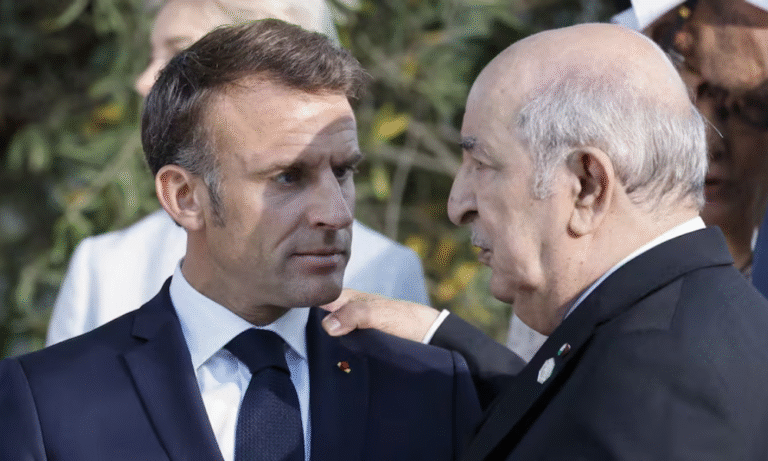
The current dispute is part of a broader pattern of tensions: France’s recognition of Moroccan sovereignty over Western Sahara in summer 2024, the imprisonment of Algerian writer Boualem Sansal, and reciprocal expulsions of diplomats in April. Efforts at a rapprochement — including a March 2025 phone call between Presidents Tebboune and Macron and the subsequent visit of French minister Jean-Noël Barrot — have quickly unraveled.
By multiplying harsh statements and repeatedly summoning foreign envoys, Algiers projects the image of a diplomatic apparatus more focused on rhetorical escalation than pragmatic solutions. President Tebboune himself has dismissed dialogue with his French counterpart as “a waste of time,” while raising the spectre of an irreversible rupture.
In Paris, Emmanuel Macron earlier this month formally requested the suspension of the 2013 bilateral accord and called for coordinated European measures to restrict entry for Algerian officials.
The move, aligned with Schengen partners, risks isolating Algiers further, at a time when it is already under pressure over recurring memory-based disputes — including archives, nuclear tests, and reparations.
MK/sf/lb/as/APA