



Despite a high connection rate, supply tensions in Algeria reveal persistent weaknesses in water management.
Algeria boasts a 98% connection rate to drinking water, according to the authorities, a level close to the standards of countries with near-universal coverage.
This indicator, highlighted during the Council of Ministers meeting chaired by Abdelmadjid Tebboune, is accompanied by a new political directive: Water resources minister, Lounès Bouzegza, has been tasked with developing a management plan for a sector facing recurring supply difficulties.
Beyond the performance of access, the issue of service continuity remains central in several regions.
This gap between coverage and actual availability has become a point of concern for the authorities. During his first meeting with sector officials, the minister emphasised the need for a “precise diagnosis” to identify any malfunctions, particularly with the approach of the summer season and Eid al-Adha, periods marked by increased demand.
The directives focus on ensuring consistent distribution, reducing losses, and combating illegal connections, revealing areas for improvement in the operational management of the networks.
In parallel, the government is pursuing a strategy of massive investment in so-called unconventional resources.
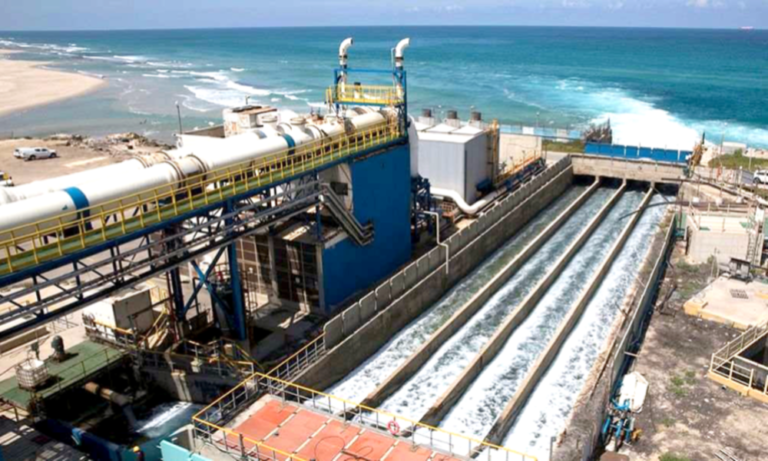
The desalination program is the cornerstone of this strategy, with five plants already operational, each with a capacity of 300,000 m³ per day, for a total of 1.5 million m³ daily. The overall cost of these facilities is approximately $2.4 billion (around €2.2 billion).
A second phase includes six new units and the provision of water to 18 wilayas (provinces), including areas up to 150 km from the coast.
However, these investments are taking place in a context marked by increased pressure on water resources. Decreased rainfall, combined with rising demand, has led to episodes of shortages in several wilayas.
To address this, an emergency program of over 27 billion dinars (approximately 185 million euros) has been mobilized.
The shift towards desalination and water transfers reflects a technical adaptation, but raises questions about the financial and energy sustainability of this model in the medium term. The challenge for the Algerian authorities thus goes beyond simply expanding infrastructure.
It now focuses on efficient management, network maintenance, and demand control.
The generalization of access to drinking water does not, as things stand, guarantee sustainable water security, in a climatic and demographic context that accentuates imbalances.
MK/AK/Sf/fss/as/APA