





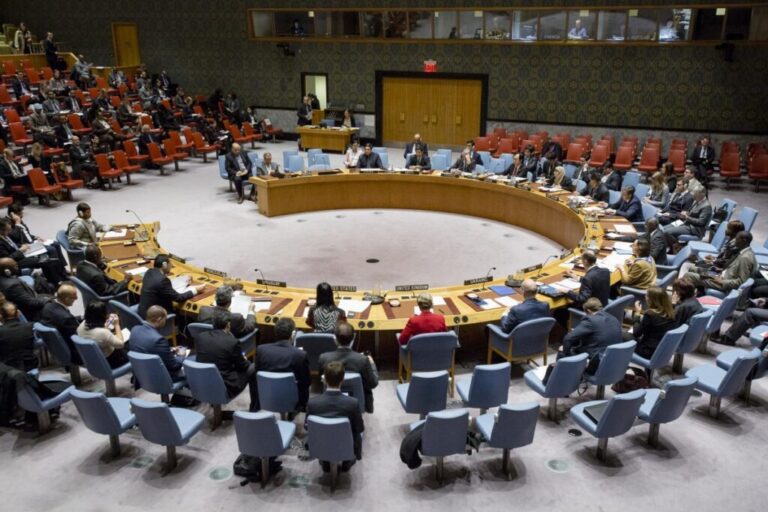
Two non-governmental organigations have welcomed UN Security Council Resolution 2797 in Geneva, describing it as a step forward toward a lasting settlement of the regional dispute over the Western Sahara.
On the sidelines of the 61st session of the United Nations Human Rights Council (HRC), two NGOs voiced their support for Resolution 2797, adopted by the Security Council, highlighting its significance in the pursuit of a political solution to the Western Sahara dispute.
The statements were delivered during the general debate on the human rights situation.
Speaking on behalf of OCAPROCE International, Saadani Maolainain noted that the resolution’s adoption comes against the backdrop of nearly half a century of regional tensions. In her view, the Security Council’s decision represents a meaningful step with the potential to foster momentum toward a lasting political settlement.
She argued that Morocco’s autonomy proposal constitutes, in her assessment, a viable pathway toward a negotiated political solution. She also drew attention to the situation of Sahrawi populations living in the Tindouf camps in southwestern Algeria, calling for a resolution that would guarantee their political, economic and social rights.
Also addressing the debate on the report of the UN High Commissioner for Human Rights, activist Gajmoula Boussif stressed that the promotion of human rights remains intrinsically linked to the existence of stable institutions and effective access to justice and public services.
She further highlighted the socioeconomic development initiatives undertaken by Morocco in the southern provinces, as well as the country’s cooperation with international human rights mechanisms. In her view, a durable political settlement would ensure the effective enjoyment of fundamental rights for all populations concerned, including those living in the Tindouf camps.
Adopted by the UN Security Council, Resolution 2797 forms part of the UN-led process aimed at achieving a negotiated, realistic and lasting political solution to the regional dispute.
Talks on the matter continue within the framework of United Nations efforts to facilitate a consensual settlement among the parties involved.
MK/ak/sf/lb/as/APA