





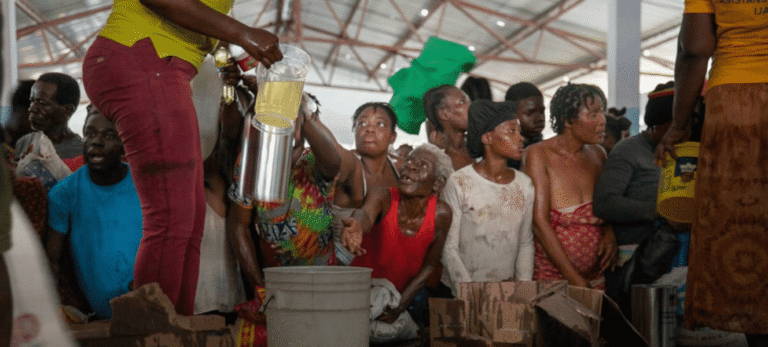
The World Food Programme (WFP) announced on Wednesday, October 15, a significant reduction in aid to several African nations, including the Democratic Republic of Congo (DRC), Somalia, and South Sudan, warning that six of its vital operations are at risk of being interrupted by the end of the year.
Faced with a collapse in humanitarian funding, the WFP is being forced to drastically cut essential assistance, leaving millions vulnerable to deepening hunger.
The DRC faces one of the most drastic reductions. Due to a $351.7 million shortfall over the next six months, WFP must reduce its beneficiaries from 2.3 million to just 600,000. This cut comes as 28 million people in the DRC suffer from acute food insecurity, with 10.3 million concentrated in the unstable eastern region. The agency stressed the severe human cost, noting: “Every ration reduction means a child going to bed hungry, a mother skipping a meal.”
The crisis is equally dire elsewhere: In Somalia, the number of beneficiaries has plummeted from 2.2 million to only 350,000 in the past year. In South Sudan, rations currently cover only 50 percent to 70 percent of basic needs, with imminent shortages expected for cereals, legumes, and oils.
Ross Smith, WFP’s Emergency Response Director, expressed deep concern over “the complete withdrawal of aid, the reduction in rations, and the duration of assistance,” adding that “many people are left without a safety net or a landing pad.”
The UN agency is sounding the alarm about a “rising tide of acute hunger.” Executive Director Cindy McCain warned that without immediate new funding, “an additional 13.7 million people could soon fall into urgent hunger,” urging donors and governments to act quickly.
DM/SS/ac/fss/abj/APA