





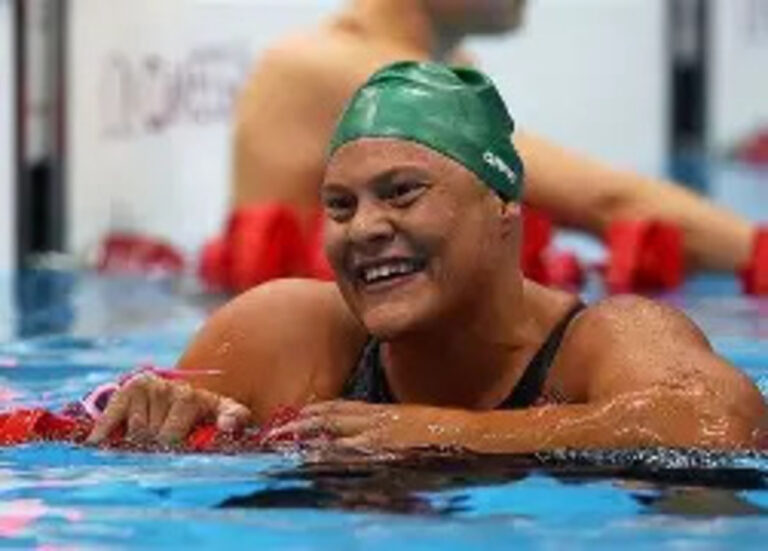
As part of Women’s Month, ahead of International Women’s Rights Day on 8 March, we look back at the remarkable journey of South African swimmer Natalie du Toit, one of the towering figures of Paralympic sport.
Born on 29 January 1984 in Cape Town, South Africa, Natalie du Toit announced herself early as one of her country’s most promising swimming talents.
At just 14, she was already competing on the international stage at the 1998 Commonwealth Games.
In February 2001, her life changed in an instant.
Returning from training on her scooter, she was involved in a road accident that led to the amputation of her left leg below the knee.
Rather than stepping away from the sport, she refused to let the injury define her and returned to training without delay.
By 2002, she had staged a stunning comeback at the Commonwealth Games, claiming two gold medals in para-swimming while also competing against able-bodied swimmers.
The following year, at the 2003 African Games in Abuja, she went a step further, winning gold in the 800m freestyle in the open category.
Her crowning moment came at the 2004 Athens Paralympic Games where she swept five gold medals and one silver across multiple swimming disciplines.
She then reaffirmed her dominance at the 2008 Beijing Paralympics, adding five more Paralympic titles to her name.
That same year, Natalie du Toit made history by becoming the first amputee swimmer to qualify for an Olympic event alongside able-bodied competitors.
At the Beijing 2008 Olympic Games, she competed in the 10km open water race, finishing 16th – a result that transcended sport.
The achievement also earned her the honour of carrying the South African flag at the opening ceremony, the first time an amputee athlete had been chosen for that role.
At the 2012 London Paralympics, she added further medals to an already extraordinary collection, capping a career defined by determination and an unwavering refusal to accept limits.
In total, Natalie du Toit won thirteen Paralympic titles and a host of international distinctions. Her story remains a source of inspiration across African sport and for women everywhere who dare to compete on the world stage.
SS/ac/lb/jn/APA