



The West African regional bloc Ecowas has firmly rejected accusations of interference in Guinea-Bissau, urging political actors to engage in dialogue amid ongoing tensions surrounding the country’s military transition and post-election fallout.
On Monday, June 29, the Commission of the Economic Community of West African States (ECOWAS) strongly dismissed claims of meddling raised by the campaign committee of former presidential candidate Fernando Dias da Costa.
The political climate in Guinea-Bissau remains highly volatile following the onset of a military-led transition in late 2025.
In a statement obtained by APA, the regional bloc clarified that its mission operates strictly under the collective mandate issued by the Authority of Heads of State and Government, without intervening in the domestic affairs of member states.
The commission emphasised that it has neither announced nor validated any constitutional processes, noting that discussions have been strictly limited to technical consultations with Bissau-Guinean authorities regarding a political roadmap.
ECOWAS insisted that these engagements should not be construed as an attempt to steer the country’s institutional framework, reiterating that all decisions remain under the sovereign authority of Guinea-Bissau’s institutions and its people.
The West African bloc also called on political stakeholders to exercise restraint and engage in constructive dialogue to foster stability, national cohesion, and an environment conducive to democratic consolidation.
This dispute unfolds during a political transition triggered by the November 26, 2025 coup, which disrupted a contested electoral process before the final results could be officially proclaimed.
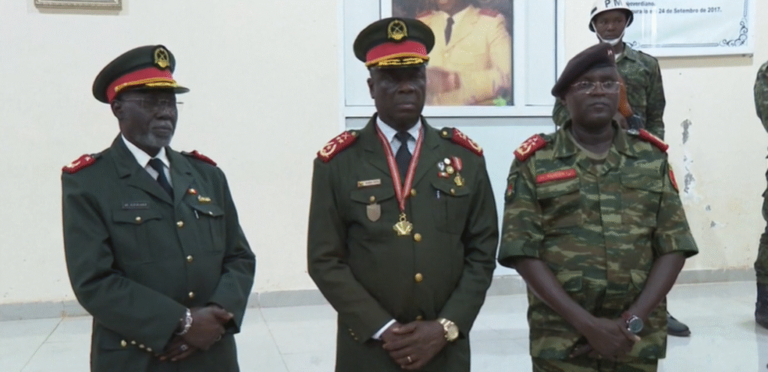
Power is currently held by General Horta Inta-A Na Man, who heads the High Military Command for the Restoration of National Security and Public Order, alongside a transitional government led by Prime Minister Ilídio Vieira Té. Military authorities originally justified their intervention by citing a prolonged post-election crisis and a high risk of destabilization, which led to the suspension of state institutions and the implementation of a transitional timeline.
While both ECOWAS and the African Union condemned the unconstitutional change of government and suspended Guinea-Bissau from certain regional mechanisms, both organisations continue active mediation efforts to facilitate a return to constitutional order.
Against this backdrop of persistent tension, ECOWAS reaffirmed its commitment to supporting a peaceful, inclusive, and nationally led political process ahead of the general elections scheduled for December 2026.
AC/Sf/lb/abj/APA