



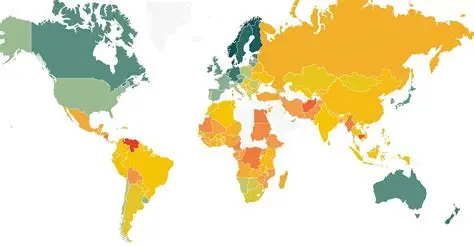
Ethiopia has ranked 133rd out of 143 countries and 31st out of 34 in Sub-Saharan Africa in the 2026 World Justice Project (WJP) Rule of Law Index.
The 2026 index, released on Wednesday revealed that authoritarian practices have become increasingly entrenched worldwide, with government interference, restrictions on civic freedoms and weakening judicial independence among the main drivers of decline.
Ethiopia recorded an overall score of 0.36 in the 2026 Index. It also ranked 12th out of 15 among low-income countries.
Globally, the Index found that 62 per cent of countries experienced a decline in rule of law, continuing what the WJP describes as a global rule of law recession. Although fewer countries declined this year than in the previous year, improvements still lag behind deteriorations.
The latest findings reinforce concerns about institutional accountability and civic freedoms in Ethiopia with the east African country witnessing weaknesses in constraints on government authority, fundamental rights, open government and the enforcement of regulations.
In the 2025 edition, the country ranked 132nd out of 143 countries, with its overall score falling by 2.4 percent from the previous year to 0.36. It placed 30th among 34 countries in sub-Saharan Africa, highlighting the depth of its institutional weaknesses relative to regional peers.
The decline has persisted across multiple editions. Ethiopia ranked 129th out of 142 countries in 2023, with a score of 0.38, after placing 123rd out of 140 countries in 2022. In the 2024 edition, it ranked 130th out of 142 countries, recording a further 2.4 percent fall in its overall score.
The WJP said the global rule-of-law recession had continued for a ninth consecutive year, with 62 percent of the countries and jurisdictions assessed recording declines, compared with 38 percent that improved. Although the share of countries experiencing deterioration fell from 68 percent in 2025, the overall direction remained negative.
The successive declines point to a longer-term deterioration rather than a one-year fluctuation. They also come against a backdrop of armed conflicts, restrictions on civic freedoms and concerns over the independence and effectiveness of public institutions.
The figures suggest that the weakest areas extend beyond the operation of courts. They include the mechanisms through which government decisions are scrutinized, public institutions are held accountable and citizens exercise fundamental freedoms.
The WJP’s constraints-on-government-powers measure assesses whether those exercising public authority are bound by law and subject to institutional and non-governmental checks. These include legislative oversight, judicial limits on executive authority and the role of an independent press in holding the government to account.
MG/APA