





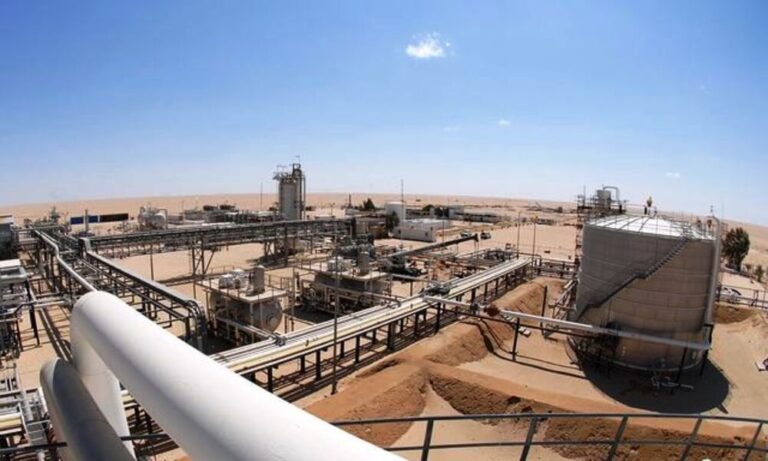
Amid an economic downturn, Libya’s Central Bank is betting on a major boost in oil production to strengthen foreign currency reserves, stabilise the dinar, and support economic growth.
In a statement released on 2 July, the Central Bank of Libya (CBL) said that an increase of 247,000 barrels per day could generate an additional $6 billion in annual revenue.
According to Libya Herald, the country currently produces around 1.4 million barrels per day, having reached a peak of 1.23 million barrels in May 2025 — the highest level in over a decade.
The government aims to raise output to 1.6 million barrels per day by the end of 2025, and to 2 million by 2027.
During a meeting held on 2 July, CBL Governor Naji Issa and National Oil Corporation (NOC) Chairman Massoud Suleiman Moussa emphasised the need for stronger coordination and financial mobilisation, including through the Libyan Foreign Bank and international banks.
This initiative comes amid ongoing political instability, a weakened dinar, and declining foreign reserves — all of which have hindered Libya’s ability to finance imports.
A production boost is expected to increase the availability of foreign currency, helping to curb inflation and ensure the supply of essential goods.
The OPEC monthly report for June 2025 noted that Libya, though exempt from production quotas due to its fragile political situation, remains a key player in the global oil market and is closely monitored.
Despite the promising outlook, challenges remain — including securing oil facilities, maintaining infrastructure, and navigating internal political rivalries.
Nevertheless, the planned increase in oil production is expected to help stabilize the exchange rate, promote sustainable growth policies, and improve living conditions for the Libyan population.
MB/ac/lb/as/APA