






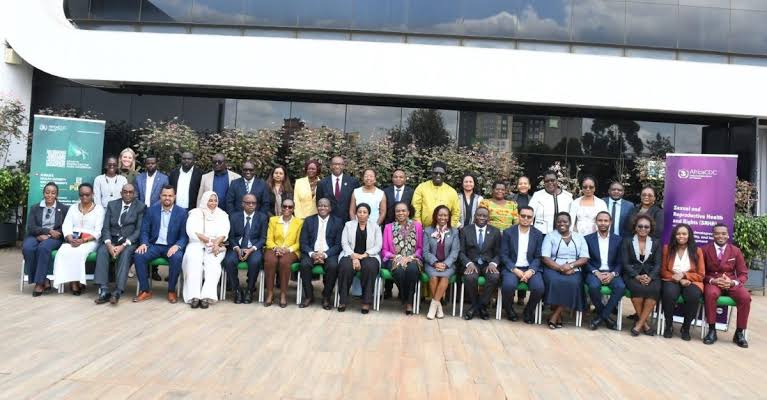
The Africa Centres for Disease Control and Prevention (Africa CDC) is holding a three-day regional workshop in Cotonou, Benin Republic aimed at accelerating efforts to improve maternal and child health and advance the continent’s goal of achieving “zero preventable maternal deaths.”
Organised in partnership with the African Union Commission, member states and several development partners, the workshop brings together government officials and experts from West, Central and North Africa to validate the findings of the first continental assessment of policies, financing mechanisms, governance and service delivery related to sexual, reproductive, maternal, neonatal, child and adolescent health (SRMNCAH).
The findings of the assessment will contribute to a continental report designed to guide public policies, strengthen government accountability and accelerate progress in reducing preventable maternal and neonatal deaths.
Representing Africa CDC Director-General Jean Kaseya, the organisation’s Regional Director for West Africa, Dr. Alinon Kokou, said that strengthening reproductive, maternal and child health is a key driver of the continent’s health sovereignty.
He called on member states to turn available data into concrete decisions, investments and measurable outcomes benefiting women, children and adolescents.
The initiative is part of the African Health Security and Sovereignty Agenda (AHSS) and supports the programme led by Tanzanian President Samia Suluhu Hassan, African Union Champion for Maternal and Child Health.
The programme is built around three major objectives: eliminating preventable maternal deaths, ending preventable neonatal deaths, and ensuring that no child remains unvaccinated.
Dr. Diana Nambatya Nsubuga, head of Africa CDC’s SRMNCAH division, stressed that declining external aid, rising debt burdens and the impacts of climate change make it essential to strengthen domestic financing, primary healthcare systems, digital transformation of health services, as well as local production of medicines, vaccines and diagnostic tools.
According to Africa CDC, 53 of the African Union’s 55 member states took part in the continental assessment, described as one of the most comprehensive ever conducted on reproductive, maternal, neonatal, child and adolescent health in Africa.
At the conclusion of the workshop, participants will adopt a reference report that will serve as a basis for national reforms, resource mobilization and monitoring of continental commitments on maternal and child health.
TE/Sf/lb/gik/APA