





A relentless spate of deadly traffic accidents in Algeria is laying bare the shortcomings of a road safety policy that remains fragmented, reactive, and devoid of measurable public targets.
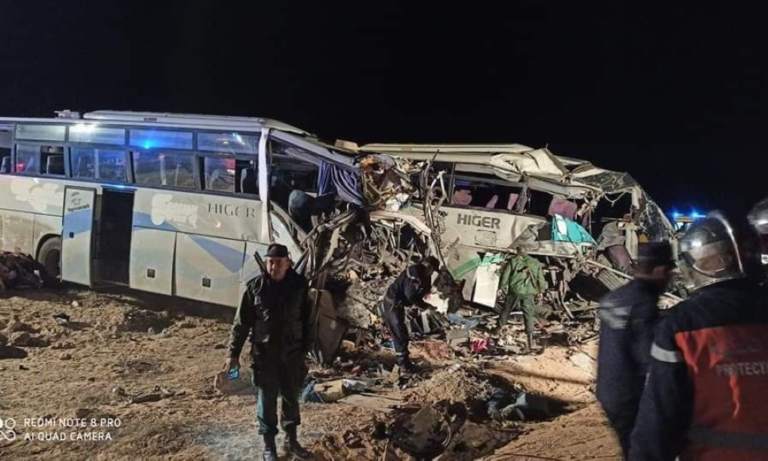
The fatal overturn of a passenger bus in El Karma, located in the Boumerdès province, has escalated far beyond a routine news item. Leaving 28 dead and 36 injured, this latest tragedy highlights the ongoing failure of Algerian road safety measures to curb a death toll that has become structural.
Following every disaster, a familiar script unfolds: emergency services respond, investigations open, official condolences are offered, and speed, vehicle condition, or driver error are singled out. Public outrage eventually fades without systemic reforms being enacted—until the next fatal crash occurs.
Data released by Civil Defense authorities underscores the sheer scale of the crisis. Between July 12 and July 18, 57 people were killed and 2,183 injured in traffic collisions. The previous week saw 37 fatalities and 1,830 injuries, compared to 28 deaths and 1,644 injuries the week prior. These figures no longer point to isolated incidents, but rather to a daily carnage on the roads.
While human error, reckless overtaking, driver fatigue, and traffic violations account for part of the problem, focusing solely on individual driver liability ignores wider systemic failures. These include the aging public transport fleet, substandard infrastructure, inadequate vehicle inspections, poor professional driver training, difficult working conditions, and lax oversight of transport companies.
Algeria does possess dedicated bodies, such as the National Road Safety Delegation. Security forces regularly conduct roadside checks, while civil defense teams deliver emergency care.
However, these efforts remain disjointed and lack integration into a comprehensive national strategy equipped with clear targets, strict timelines, and public key performance indicators.
Countries that have successfully achieved long-term reductions in traffic fatalities have implemented holistic policies—combining infrastructure safety upgrades, automated enforcement, ongoing driver education, continuous prevention campaigns, and systematic accident investigation. In Algeria, however, state action remains largely reactive.
The core issue is no longer merely identifying the immediate cause of each crash. Instead, it is determining how many more lives must be lost before road safety is finally treated as a national emergency and a vital obligation of the state.
MK/AK/Sf/lb/as/APA