





As Ramadan 2026 draws near, the Algerian government has strengthened its market control mechanisms, once again demonstrating an economic approach based on urgency, surveillance, and direct state intervention.
Just over a month before Ramadan, the authorities announced the establishment of a multi-sectoral commission attached to the Prime Minister’s office, tasked with monitoring the supply of the national market and price stability during the holy month.
The decision was formalised following an inter-ministerial meeting chaired by Prime Minister Sifi Ghrieb, in accordance with instructions from President Abdelmadjid Tebboune, according to an official statement.
The stated objective is to ensure the continuous availability of widely consumed products—fruits and vegetables, red and white meat, and basic necessities—and to prevent the recurring market tensions observed during periods of high demand.
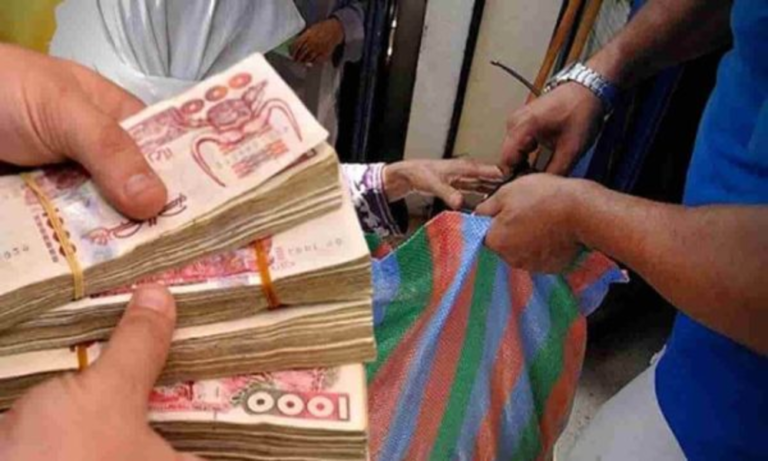
Specific measures have also been put in place to guarantee the availability of cash, particularly at Algeria Post offices and ATMs, which are traditionally overwhelmed during Ramadan.
On paper, the system is intended to be comprehensive. In practice, it primarily illustrates the persistence of a centrally planned economic model, where price stability relies less on the normal functioning of production and distribution chains than on centralised monitoring, control, and directive mechanisms. The creation of a “control tower” at the highest level of the executive branch reflects a short-term approach, repeated annually, without any structural addressing of market imbalances.
Because behind the official mobilisation lies a recurring observation: The Algerian economy remains vulnerable to seasonal shocks. The cyclical price increases during Ramadan reveal deep-seated weaknesses – dependence on imports, poor agricultural logistics, fragmented distribution channels, and the size of the informal sector – that ad
hoc committees struggle to correct in a lasting way.
The government is highlighting a series of social measures, including a digital solidarity bonus and strengthened coordination of social programs.
While these initiatives aim to mitigate the impact of Ramadan on purchasing power, they are more about compensation than a strategy for wealth creation or long-term market regulation.
The announced digitalisation improves traceability but does not replace a thorough reform of subsidy and price-setting mechanisms.
Since its appointment, the government led by Sifi Ghrieb has made Ramadan a major political and social test. But this anticipation, presented as an act of good governance, also underscores the economy’s chronic inability to absorb a predictable increase in demand without direct state intervention.
Governing, in this case, is less about forecasting than about containing.
MK/ak/ac/Sf/fss/as/APA