



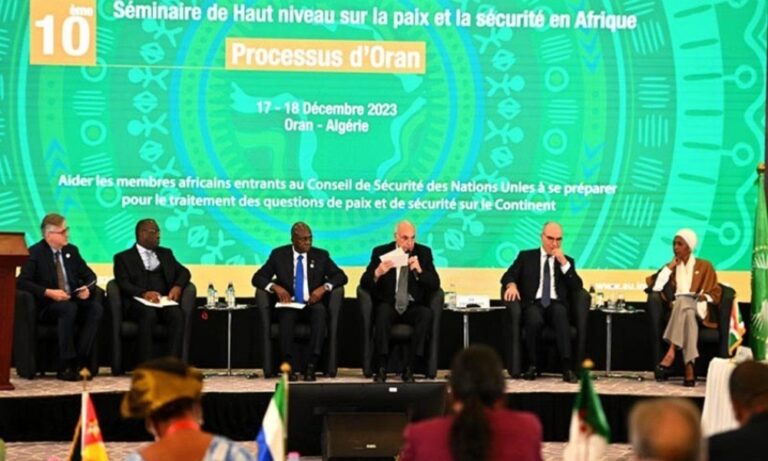
At the opening of the “Oran Process” seminar in Algiers, Algerian Foreign Minister Ahmed Attaf urged Africa to “speak with one voice” in multilateral forums.
While attributing external interventionism to the scarcity of African initiatives, this stance simultaneously highlighted the limitations and passive nature of Algerian diplomacy regarding major regional crises.
The 12th High-Level Seminar on Peace and Security in Africa, known as the “Oran Process,” served as the platform for Attaf’s remarks on Monday. He asserted that “the scarcity of African initiatives to resolve conflicts has opened up a wide space for external interventions,” and called for strengthening the continent’s capacity to propose its own solutions.
Despite Algeria consistently positioning itself as a central player in African peace and security, its actions in resolving recent regional crises appear limited. While Attaf called for a “united African bloc” at the UN Security Council, he avoided addressing the deep divisions that persist within the African Union and the profound disagreements among Maghreb and Sahel states on critical issues.
Algeria has failed to translate its frequent pronouncements into concrete, operational initiatives on several major crises it cited, including: The War in Sudan: Attaf noted the lack of settlement prospects but offered no new Algerian framework for mediation. The Political Deadlock in Libya: The minister described the Libyan issue as “forgotten” but failed to mention the paralysis of the mediation efforts previously led by Algiers. Despite being a direct neighbor, Algeria has not presented any operational roadmap, allowing other regional and international actors to occupy the diplomatic arena. Instability in the Sahel: The security situation continues to deteriorate significantly, even as Algeria continues to champion the largely defunct 2015 Algiers Agreement.
The issue of Western Sahara also falls within this framework: Algiers annually emphasizes the “absence of a lasting solution” but has neither participated in a single round of UN talks since 2019 nor proposed any tangible initiative to accelerate the political process. The diplomatic role claimed by Attaf is thus weakened by an essentially declaratory stance that remains disconnected from concrete engagement on the ground or within regional operations.
Attaf acknowledged a “decline in the continental diplomatic role,” attributing it to “insufficient attention paid to our own areas of tension.” However, this self-criticism remained largely theoretical. Despite the stated ambition of “African solutions to African problems,” this edition of the “Oran Process” seminar was largely limited to reiterating existing observations, with no new, structuring African initiative—led or substantively supported by Algiers—emerging.
MK/Sf/fss/abj/APA