



A quiet but steady diplomatic current is flowing from Africa to Eastern Europe – and its destination is Minsk.
In recent months, a growing number of African delegations have made their way to Belarus, raising a compelling question: is Belarus emerging as Africa’s new partner of choice or are African nations simply becoming new markets for Belarusian exports?
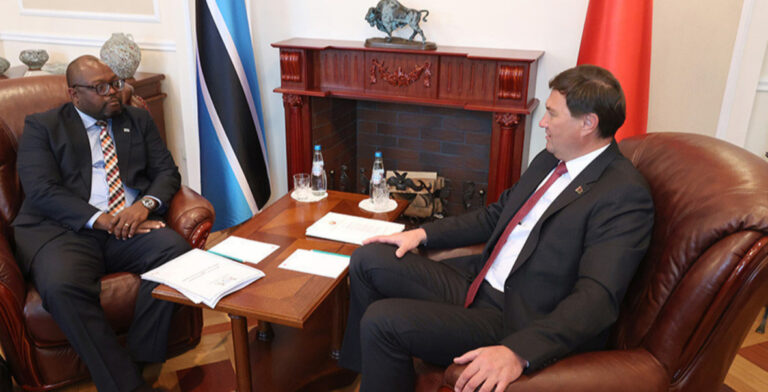
The latest signal came on 1 July when Botswana’s International Relations Minister Phenyo Butale paid the country’s first-ever official visit to Belarus.
The visit culminated in a joint statement pledging deeper cooperation in agriculture, education, healthcare and trade.
Butale also toured Belarusian industrial sites, including tractor assembly plants and mining operations in search of collaboration opportunities.
Botswana is not alone.
In June, Kenya’s ambassador to Belarus, Peter Mutuku Mathuki met with senior Belarusian officials to discuss expanding trade and inter-parliamentary ties.
A Kenyan delegation also participated in the Belagro 2025 exhibition – its first appearance at the event – signaling Nairobi’s growing interest in Belarusian agricultural technology.
Zimbabwe has had long-standing ties with Minsk.
During a visit in May led by President Emmerson Mnangagwa, Zimbabwean officials explored deals in dairy imports, cotton exports and textile processing.
The two countries are already cooperating in mining, agriculture and education, with Belarusian President Alexander Lukashenko’s 2019 visit to Harare laying the groundwork for this expanding partnership.
Mozambique and Ghana have also joined the diplomatic caravan.
Their agriculture ministers visited Minsk in June to discuss joint ventures in mechanised farming and infrastructure development.
Ghana, in particular, signed agreements to establish service centres for Belarusian machinery, a move that could anchor Belarus’s industrial footprint in West Africa.
The flurry of activity suggests a deliberate pivot by African nations toward Belarus.
But what’s driving it?
For Belarus, the answer is clear: sanctions from the West have pushed Minsk to seek new markets and allies.
Africa, with its growing economies and infrastructure needs, offers fertile ground.
Belarusian officials have pitched their country as a reliable partner offering industrial know-how without political strings.
For African countries, the calculus is more complex.
Belarusian machinery and expertise – particularly in agriculture – are attractive. But the risk, analysts warn, is that these partnerships could become one-sided, turning African nations into passive recipients of Belarusian goods rather than co-creators of value.
“There’s a fine line between strategic partnership and supplier-client dependency,” political analyst Donald Porusingazi said.
“The key will be whether these deals include technology transfer, local manufacturing and long-term capacity building.”
So far, the signs are mixed.
While some agreements include training and student exchanges, others focus heavily on equipment imports.
The challenge for African governments will be to ensure that these engagements serve national development goals – not just Belarus’s export ambitions.
As more African leaders make their way to Minsk, the spotlight is now on whether these visits will yield win-win outcomes – or simply stock the shelves of a new geopolitical supermarket.
JN/APA