





Extreme weather events and severe environmental hazards affected 349,580 people across Benin in 2026, creating an estimated CFAF 290 billion ($470 million) funding requirement to support emergency response, post-disaster recovery, and climate adaptation initiatives.
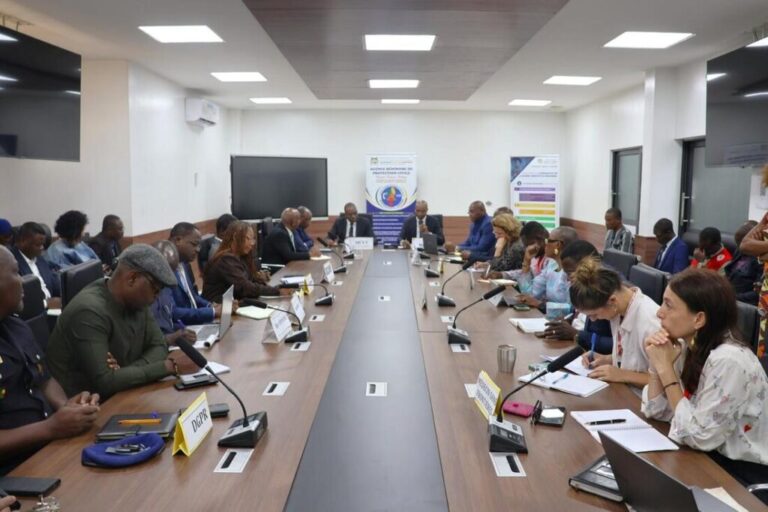
Details of the humanitarian and financial assessment were presented in Porto-Novo during a high-level meeting of the National Platform for Disaster Risk Management and Climate Change Adaptation, chaired by government officials, international technical partners, and relief organizations.
Djibril Mama Cissé, Minister Delegate to the President of the Republic in charge of Interior and Public Security, reported that disaster impacts extended to 52,583 households across 1,199 villages and 219 districts nationwide. Widespread flooding, extreme rainfall, drought, severe winds, and fires damaged critical infrastructure, swept away crossing structures, and caused fatal drownings, according to Abdel Aziz Bio Djibril, Director-General of the Beninese Civil Protection Agency (ABPC). Emphasizing that climate resilience must be treated as a strategic security and urban planning imperative, Beninese authorities called on international development partners to accelerate funding mobilization while transforming the National Platform into an predictive decision-making body capable of mapping vulnerable zones and integrating climate adaptation directly into national public policy.
TE/Sf/lb/abj/APA