



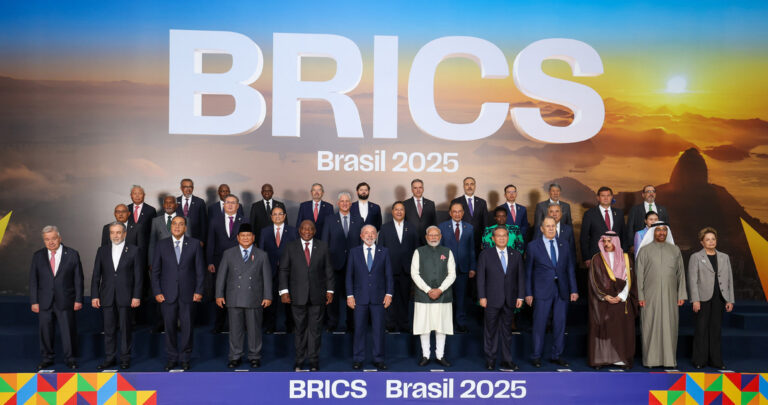
The 17th BRICS Summit concluded on Monday in Brazil with a resounding call for a restructured global governance system as leaders from the bloc’s member states demanded an end to Western-led dominance and Cold War-era power dynamics.
Hosted under the theme “Strengthening Global South Cooperation for More Inclusive and Sustainable Governance,” the two-day summit brought together heads of state from Brazil, Russia, India, China, South Africa and newly admitted member Indonesia, alongside partner countries from Africa, Asia and Latin America.
Brazilian President Luiz Inácio Lula da Silva led the charge, declaring that “we don’t want a world under tutelage.”
“We don’t want any more Cold War. We don’t want any more disrespect of sovereignty nor any more wars. We need structural changes to live in the 21st century and not in 1945,” Lula said at the end of the meeting.
He cited the humanitarian crisis in Gaza as emblematic of the failures of current global leadership.
The summit’s final declaration called for comprehensive reform of the United Nations, particularly the Security Council, to reflect contemporary geopolitical realities.
BRICS leaders argued that countries like India and Brazil, along with the African continent, remain underrepresented in key decision-making bodies despite their demographic and economic weight.
The summit also addressed global conflicts, condemning recent military strikes in Iran and calling for a permanent ceasefire in Gaza.
Leaders expressed concern over the displacement and violence in Sudan, urging African-led solutions to regional instability.
In a move that may further unsettle Western powers, BRICS discussed alternatives to the SWIFT interbank payment system, signalling a push toward de-dollarisation and financial sovereignty.
The bloc’s growing assertiveness has drawn criticism from US President Donald Trump who this week threatened a blanket 10 percent tariff on countries aligning with what he termed “anti-American policies.”
Lula responded sharply, calling the threats “irresponsible”.
“We don’t want an emperor,” the Brazilian leader asserted.
South African President Cyril Ramaphosa described the summit as a “resounding success,” praising the bloc’s growing influence and reaffirming its commitment to sovereignty, inclusivity and multilateral cooperation.
He also welcomed Indonesia’s admission and noted rising interest from the Global South in joining BRICS.
With India set to host the next BRICS Summit in 2026, the bloc’s momentum toward reshaping global governance appears poised to accelerate.
Collectively, BRICS now represents over half the world’s population and 40 percent of global gross domestic product.
JN/APA