



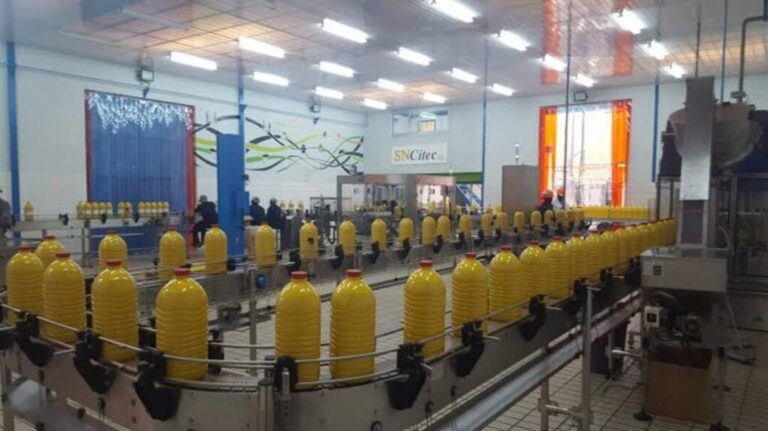
The Burkinabe government has announced the nationalization of the SN-CITEC oilseed processing plant.
The decision, made on Thursday, November 20, 2025, aims to ensure the country’s industrial and food security amid challenges related to raw material supply and over-reliance on the cotton sector.
The move was triggered by the announcement that the majority shareholder planned to withdraw and sell their 53 percent stake in the company.
According to Burkina Faso’s Minister of Industry, Serge Poda, the nationalization of SN-CITEC is a critical step within the broader strategy of “industrial sovereignty,” championed by the current authorities.
“In the context of asserting industrial sovereignty, initiated by Burkina Faso under the leadership of our comrade Captain Ibrahim Traore, President of Faso, Head of State, the Government approached the majority shareholder to express its willingness to proceed with the repurchase of their shares,” Minister Poda stated after the Council of Ministers meeting.
Faced with an impasse in negotiations for the buyout of the private shares, the State opted to nationalize the company, reversing the privatization that took place in 1995.
SN-CITEC, a subsidiary of the GEOCOTON group, is the nation’s leading oilseed company. It specializes in producing edible oil, oilseed cake, animal feed, and household soap. Its cottonseed processing adds significant value to the national economy.
Despite its substantial nominal capacity—120,000 tonnes of crushable cottonseed per year and the potential to produce up to 22 million litres of refined oil (over 30% of national needs)—the company has consistently operated at only about 50 percent of its capacity. This underutilization is primarily attributed to a limited local supply of cottonseed, often exacerbated by parallel exports and supply chain irregularities.
The company plays a vital role in local employment and directly supports cotton farmers. Therefore, the nationalization aims to achieve several strategic objectives: Ensure stable production. Secure the supply of raw materials. Strengthen Burkina Faso’s industrial and food sovereignty.
By regaining control, the government seeks to better utilize the plant’s full capacity and place it centrally in the national effort to add value to domestic oilseeds.
HO/Sf/ac/fss/abj/APA