





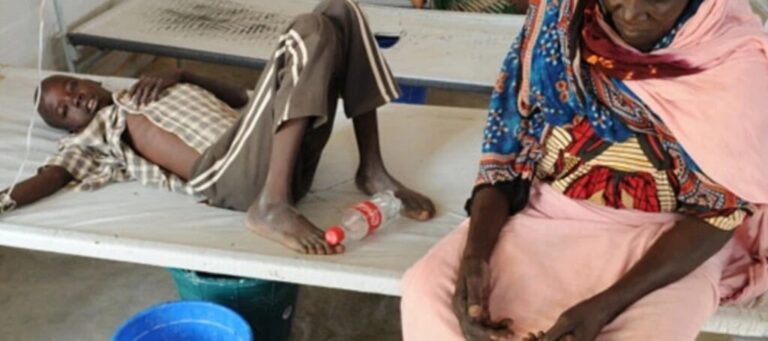
The cholera epidemic continues to spread in Chad, with 239 cumulative cases and 13 deaths since mid-June, while health authorities are intensifying their response, particularly in Ndjamena where the case fatality rate remains especially high.
The cholera epidemic that has been affecting Chad since mid-June continues to spread.
According to the latest situation report (SITREP No. 029) from the Ministry of Public Health, covering the period from August 2 to 3, the country now has a total of 239 confirmed cases and 13 deaths, following the registration of 11 new cases and one death in 48 hours.
The national case fatality rate stands at 5.4%, well above the 1% threshold considered acceptable.
The epidemic began on June 13 in the town of Karal, in the Hadjer Lamis province, where two suspected cases had been reported.
Analyses conducted on June 16 confirmed the presence of Vibrio cholerae O1 Ogawa, before the disease reached the capital on July 19.
Three suspected cases were detected in the Ndjamena North health district, with biological confirmation on July 21.
The authorities officially declared an outbreak in Ndjamena on July 24.
While Karal remains the main hotspot with 168 cumulative cases, the situation is more concerning in the capital, where 72 cases and 8 deaths have been recorded.
Ndjamena thus has a case fatality rate of 11.11%, higher than the national average. The Ndjamena Central district has the highest case fatality rate (18.8%), while Ndjamena North remains the most active hotspot with 11 new cases reported in the last 48 hours.
The epidemic has now spread to two provinces, three health districts, and 44 villages or neighbourhoods across eight active responsibility zones, including Karal 1, Karal 2, Baltram, Alkouk, Djougoulie, Madjorio, Farcha and Mara.
Clinically, 212 patients, or 89% of cases, have recovered, while 6% remain hospitalized. However, the authorities note that five of the 13 deaths occurred within communities without prior medical care, illustrating the ongoing challenges of early case detection.
In response to this situation, the government has strengthened its response with support from the World Health Organization (WHO), UNICEF, Doctors Without Borders (MSF) and the Chadian Red Cross, under the coordination of the Operational Committee for Surveillance and Preparedness (OCSP).
Five health facilities are currently providing care for patients, while 28 health workers have been trained in cholera management and 63 other providers have been sensitized to treatment protocols.
The vaccination campaign continues in the Ndjamena North district, where it targets 160,922 people. To date, 50,799 people have received a dose of the vaccine, representing an overall coverage of 31.57%.
Similarly, infection control teams have disinfected 847 households in the affected areas, while community awareness activities continue with the participation of the National Youth Council of Chad and the NGO Almoussada in several neighbourhoods of the capital.
CA/te/Sf/fss/gik/APA