





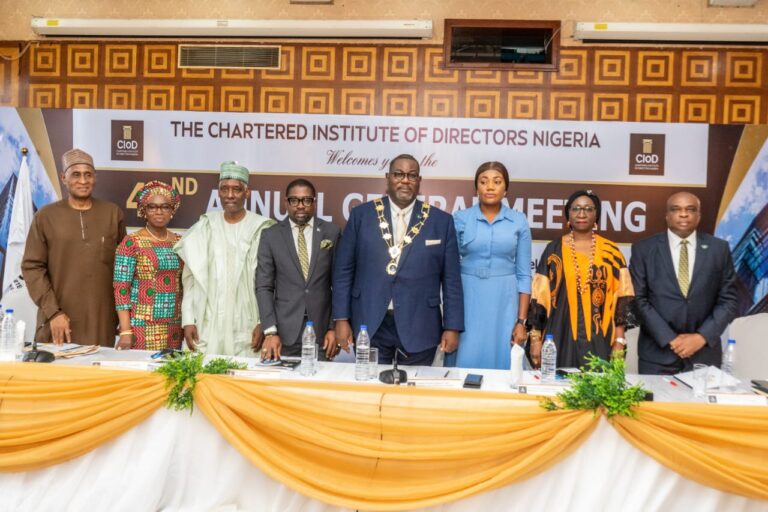
The President of the Chartered Institute of Directors (CIoD), Mr. Adetunji Oyebanji, says that Nigeria’s 2026 second-half outlook will be shaped by ongoing economic reforms, Middle East tensions, opportunities created by deeper African economic integration and rapid digital transformation.
Addressing the institute’s 42nd Annual General Meeting (AGM) in Lagos, Mr. Oyebanji, said that Nigeria’s economic outlook remained positive, supported by improving macroeconomic conditions, stronger investor confidence and gains from recent structural reforms.
According to him, the continued momentum of the country’s domestic reform programme is expected to support economic growth and business expansion in the months ahead.
He, however, noted that inflationary spillovers from the ongoing Middle East conflict could pose risks to both global and domestic prices.
“The outlook for the remainder of 2026 is shaped by three main developments.
“They include the continued momentum from Nigeria’s domestic reform programme and improving macroeconomic conditions, as well as the inflationary spillovers from the Middle East conflict on global and domestic prices.
“They also include the opportunities created by deeper African economic integration, improved institutional credibility and rapid digital transformation,” he said.
Oyebanji said that improving monetary conditions, stronger capital market performance and enhanced external sector stability were creating new opportunities for investment and access to capital.
He noted that businesses with strong governance structures would be better positioned to take advantage of the improving economic environment.
The CIoD president said that Nigeria’s economic review for 2025 and 2026 showed that the country was on an improving growth path in spite of lingering challenges.
According to him, stronger macroeconomic fundamentals, major structural reforms and rising investor confidence are laying more stable foundation for medium- and long-term economic growth.
He described the reforms implemented in 2025 as one of the most significant periods of economic restructuring in Nigeria’s recent history.
Oyebanji, however, said that the long-term success of the reforms would depend on effective implementation and strong corporate governance across both the public and private sectors.
“While challenges remain, the economy is supported by stronger macroeconomic fundamentals, significant structural reforms and improved investor confidence.
“This creates a more stable foundation for medium- to long-term growth and development,” he added.
GIK/APA