





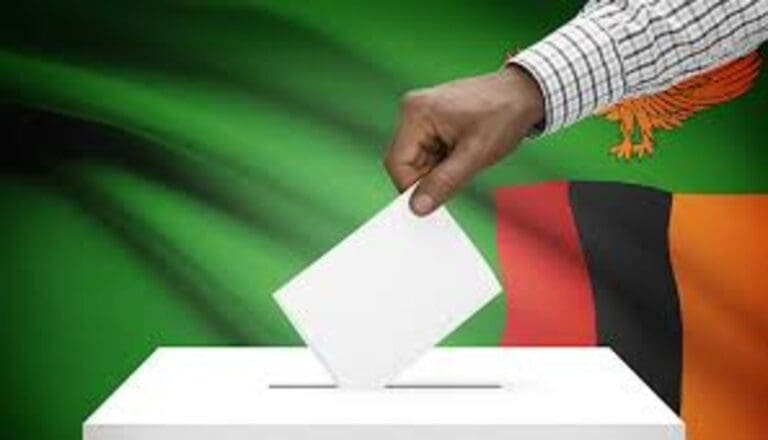
A US‑based think tank says Zambia’s United Party for National Development is likely to win the country’s 13 August general elections, projecting a 60 percent probability that President Hakainde Hichilema’s party will secure a parliamentary majority under the country’s new mixed electoral system.
In a report published on Wednesday, the Delaware-based Robert Lansing Institute for Global Threats and Democracies Studies (RLI) positioned the UPND as the frontrunner in what analysts widely regard as one of southern Africa’s most consequential elections this year.
“The most likely outcome is the re-election of President Hakainde Hichilema and the retention of a UPND-led parliamentary majority, although likely with a reduced margin due to persistent cost-of-living concerns and a more unified opposition,” RLI said.
It noted that economic stabilisation has strengthened Zambia’s international standing over the past five years “but many households have yet to experience the benefits of recovery, making affordability and employment the central electoral issues.”
Zambians will vote in presidential, parliamentary and local government elections under an amended constitutional framework that expands the National Assembly and introduces proportional representation seats, including reserved positions for women, youth and persons with disabilities.
The reforms are expected to increase overall representation while giving nationally organised parties a stronger chance of converting vote share into legislative seats, according to RLI.
RLI’s analysis says the election is shaping up as a contest between competing narratives: macroeconomic recovery versus stagnant living standards, democratic reform versus accusations of growing executive centralisation, and Western‑aligned economic policy versus rising populist nationalism.
Although Zambia’s democratic institutions remain comparatively robust, the institute notes that cost‑of‑living pressures, unemployment and electricity shortages continue to dominate voter concerns.
President Hichilema enters the race with the advantage of incumbency and a record of debt restructuring, falling inflation, renewed International Monetary Fund support and recovering mining investment.
But the report warns that these gains have not translated into improved household incomes, giving the opposition – now coalesced around Brian Mundubile – an opening to frame the election as a referendum on everyday hardship.
RLI assigns a 25 percent probability to a reduced UPND majority, 10 percent to a hung parliament and five percent to an opposition victory.
It says the election will likely be decided in swing provinces and urban centres such as Lusaka, where voters are highly sensitive to food prices, unemployment and governance concerns.
JN/APA