





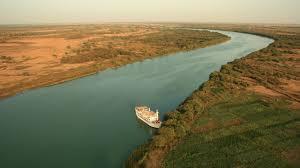
Africa is turning to cooperation to safeguard its transboundary river basins as climate change increasingly threatens the continent’s water resources.
It is in this spirit of collaboration that Senegal has been hosting, since Wednesday in Dakar, the 9th session of the Council of the African Network of Basin Organizations (ANBO/RAOB), a strategic meeting bringing together leading continental authorities responsible for water management.
True lifelines for millions of people, shared river basins are now facing multiple and unprecedented pressures. For participants gathered in Dakar, only collective and coordinated action can provide sustainable responses.
“Water management in Africa can only be conceived through the lens of cooperation, strategic vision and collective commitment,” said Baboucar Mboundor Ngom, Secretary-General of Senegal’s Ministry of Water and Sanitation.
“We have a historic duty to preserve our water resources, strengthen the resilience of our territories and, above all, guarantee future generations an environmental legacy that meets their expectations,” he stressed.
He recalled that “transboundary basins, which shape a large part of Africa’s hydrological geography, require shared responsibility and represent both a unique opportunity to strengthen regional integration, stability and sustainable development on our continent.”
For RAOB president Florence Grace Adongo, cooperation around transboundary water resources “contributes directly to diplomacy, peace and security, while enabling inclusive growth, sustainability and innovation.” She reiterated the founding conviction of the network, created in Dakar in 2002: “that cooperation works.”
Unprecedented hydro-climatic pressures
Beyond the cooperation imperative, participants shared a stark assessment of the climate emergency.
“Africa is facing hydro-climatic challenges of unprecedented magnitude,” Ngom warned.
“Climate change, demographic pressure, socio-economic transformations and growing tensions over competing water uses remind us every day of the fragility of our river basins,” he added.
Echoing this view, the RAOB President said the continent’s shared waters are now subject to “unprecedented pressures.”
“Climate change, rapid population growth, urbanisation and competing demands for water are testing our institutions and our collective resolve,” she said, noting that “in this context, basin organisations have never been as relevant and strategic as they are today.”
The Deputy High Commissioner of the Organisation for the Development of the Senegal River (OMVS), which serves as RAOB’s Permanent Technical Secretariat, also warned of “growing pressures: climate change, hydrological variability, population growth, accelerated urbanisation, and ever-increasing energy and food needs.”
Climate adaptation as a strategic priority
In response, climate change adaptation has emerged as a central pillar of the network’s work.
“We believe that basin organisations and basin-based planning are essential platforms for integrating climate adaptation into our strategies, infrastructure planning and priority actions,” said Eric Tardieu, Secretary-General of the International Network of Basin
Organisations (INBO/RIOB).
According to him, INBO and RAOB can “continue to demonstrate the role and effectiveness of basin organisations in achieving better adaptation,” recalling that “there is no water security without ecological security, and no ecological security without water security.”
RAOB President highlighted several strategic opportunities to strengthen the continent’s climate resilience, including support for climate finance readiness and access, ensuring
the sustainable availability of water resources and guaranteeing equitable access to water for all populations.
She also called for “greening Africa” through mass mobilisation guided by coherent public policies, aimed at enhancing ecosystem sustainability and territorial resilience.
Investment programmes in Integrated Water Resources Management were discussed, covering landscape restoration, tree planting, balanced infrastructure development, pollution management and ecosystem rehabilitation.
A forward-looking strategic agenda
The council’s work focuses in particular on accelerating climate adaptation, strengthening hydrological and environmental monitoring tools, improving sustainable financing mechanisms and consolidating strategic partnerships.
The session is expected to validate RAOB’s 2026–2035 Strategic Action Plan, aligned with Africa’s Water Vision 2063 as well as global frameworks, including the Sustainable Development Goals and the Paris Agreement.
This new strategic framework underpins the network’s ambition to become “a world-class network that influences all policies and decisions related to the sustainable management of transboundary watercourses in Africa.”
The Dakar meeting comes at a pivotal moment, four years ahead of the 2030 Sustainable Development Goals deadline, within the framework of the African Union’s Agenda 2063 and in the run-up to the 2026 United Nations Water Conference.
It also precedes the high-level preparatory meeting for that conference, scheduled to take place in Dakar on 27–28 January.
Deliberations will continue until 23 January, with the aim of providing Africa with a common roadmap to transform the climate crisis into an opportunity for enhanced cooperation and sustainable development.
ARD/Sf/lb/jn/APA