





Following its integration into secondary education, Information and Communication Technologies in Education (ICTE) will now be extended to pre-primary and primary schools in Côte d’Ivoire, commencing with the 2025-2026 academic year.
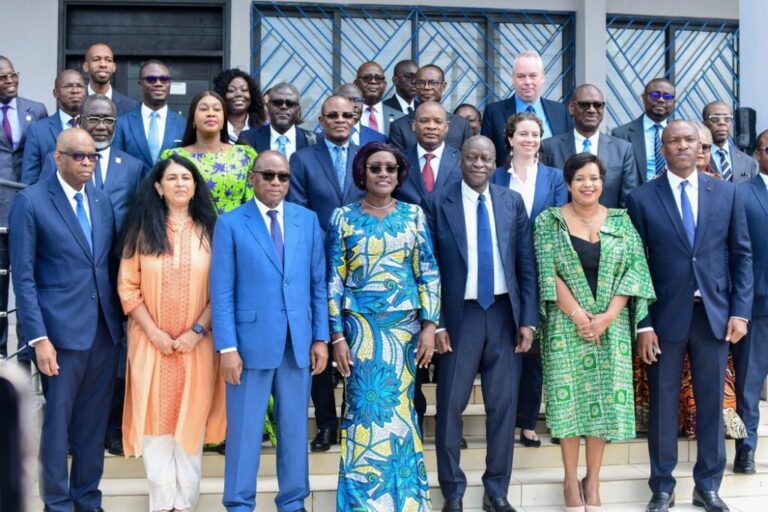
Professor Mariatou Kone, the Minister of National Education and Literacy, shared this significant development during a working session held on Monday, June 30, 2025, at the Lycee Technique d’Abidjan with Mr. Ousmane Diagana, the World Bank Vice President for West and Central Africa.
This educational reform, a direct outcome of the General Assembly on National Education and Literacy (EGENA), will receive substantial support from the World Bank. The initiative represents a crucial step in adapting Côte d’Ivoire’s education system to the demands of a globalized, technologically driven world. It aims to introduce young children to digital tools from their earliest years, thereby laying the groundwork for digital literacy, fostering digital citizenship, and equipping students with essential skills for the future.
The meeting also served as a platform to present the CIRA initiative, an ambitious program designed to consolidate and enhance the impact of various ministerial programs within the education and training sector, with a target of training 1.1 million young people. Minister Kone underscored the importance of this synergy to maximize the effectiveness and coherence of actions and to improve the employability of Ivorian youth.
ICTE was introduced into secondary education in 2024, and the ministry is now extending this integration to pre-primary and primary levels. Minister Kone also highlighted two other reforms: establishing seamless transitions between different educational levels (National Education, Technical Education, and Higher Education) to ensure more coherent student pathways, and the training and professionalization of guidance inspectors to better guide students and inform parents about educational choices.
Expressing gratitude for the World Bank’s support in implementing the EGENA recommendations, Minister Kone received praise from World Bank Vice President Ousmane Diagana, who commended her leadership and the progress achieved in the education sector. Diagana reaffirmed the World Bank’s commitment as a strategic partner, assuring that its expertise would support the implementation of this “vast” government program.
He emphasized the institution’s significant investments in human capital training, underscoring human development as a top priority, and lauded the effectiveness of the programs resulting from the National Education and Literacy Summit. The meeting saw the participation of Mr. Koffi N’Guessan, Minister of Technical Education, Vocational Training, and Apprenticeships; Minister Toure Mamadou, in charge of Youth; and a representative from the Ministry of Higher Education and Scientific Research.
AP/Sf/fss/abj/APA