



The European Bank for Reconstruction and Development (EBRD) and Nador West Med (NWM) – Betoya Industrial & Logistic Zone (BILZ) signed a €2.1 million grant agreement in Rabat on
Friday to support the development of the complex as an attractive, dynamic, and sustainable economic zone in Morocco.
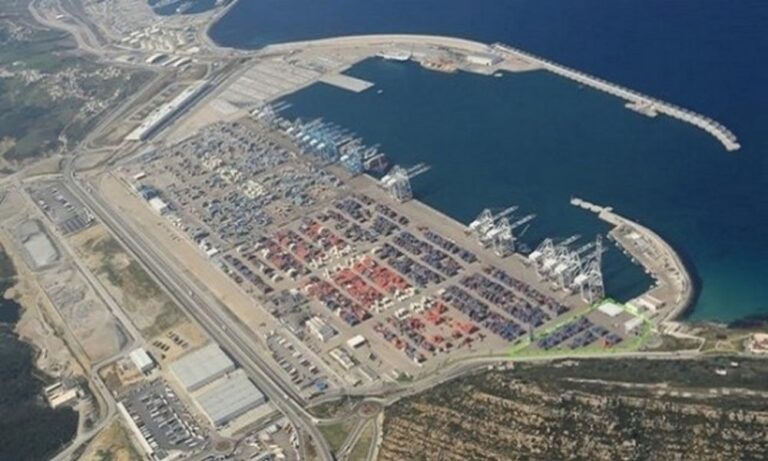
The agreement, signed by Haytham Eissa, EBRD Country Director and Head of Morocco, and Mohamed Jamal Benjelloun, CEO of Nador West Med, will finance a Technical Cooperation (TC) program to support Nador West Med in preparation for the commissioning phase of the industrial and port complex, according to an EBRD press release.
This support complements €120 million in financing granted by the EBRD in 2025. The new program aims in particular to accelerate the digitalisation of management and operational processes, integrate resilient infrastructure and sustainable energy solutions, and strengthen the institutional capacities of the managing entity.
One of the key areas focuses on establishing a fully digital one-stop shop within the Bétoya Industrial & Logistic Zone. This system is designed to offer investors a simplified and seamless process, facilitating the establishment of their activities and increasing the platform’s attractiveness both nationally and internationally, the EBRD added.
In parallel, a dedicated team will support the development of a sustainable infrastructure plan that aims to integrate resilient infrastructure and sustainable energy solutions into the zone’s development from the planning phase onward, ensuring its long-term climate resilience.
Recognising that infrastructure investments must be accompanied by a strengthening of human capital, the technical cooperation program will also include targeted support for the development and consolidation of the technical, managerial, and cross-functional skills of NWM staff.
This program will also support the skills development essential for the launch and optimal operation of the port complex and adjacent business parks, while fostering a dynamic of continuous performance improvement, both collective and individual, to ensure the project’s success, competitiveness, and sustainability.
Haytham Eissa emphasised that “this technical cooperation program reflects the EBRD’s commitment to supporting Morocco’s regional development and strengthening its economic competitiveness.”
“By combining digital innovation, sustainable infrastructure planning, and skills development, we aim to position the NWM complex as a leading industrial and logistics hub.” Through this joint financial and technical commitment, the EBRD supports the emergence of NWM as a catalyst for foreign direct investment, industrial competitiveness, and job creation, while ensuring that the project’s benefits extend to local communities and contribute to inclusive regional growth,” he
emphasised.
A founding member of the EBRD, Morocco became a country of operations in 2012.
Since then, the institution has invested nearly €6 billion in the kingdom through 125 projects.
AK/fss/as/APA