





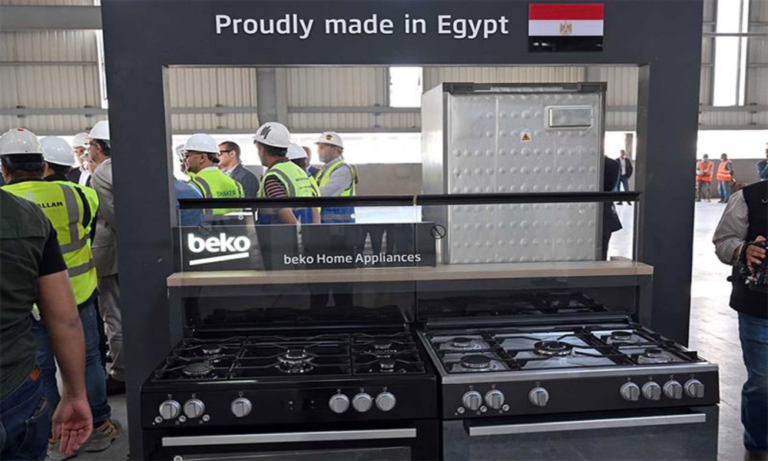
Egypt has identified seven priority industrial sectors as part of its 2026–2030 industrial strategy.
According to an official statement, the sectors were unveiled on Monday, May 4, during a meeting between Minister of Industry Khaled Hashem and Prime Minister Mostafa Madbouly,
The statement explained that as part of this roadmap, the government aims to boost the country’s industrial competitiveness by strengthening cooperation with the private sector.
It added that the strategy reflects Egypt’s ambition to reposition its industry both regionally and globally, with a focus on upgrading value chains.
The selected sectors, according to the statement, include ready-to-wear garments, textiles, agri-food industries, automotive, electrical equipment and engineering, electronics assembly, and pharmaceuticals.
According to the ministry, the selection is based on several criteria, including export competitiveness, industrial value addition, production diversification, and the ability to attract foreign investment.
On the operational front, authorities are currently reviewing incentive schemes and subsidies that could be granted to these priority sectors.
It noted that the objective is to create a more attractive industrial environment aligned with the needs of both local and international investors, while strengthening the national production base.
The strategy also targets $100 billion in non-oil exports by 2030, a benchmark considered key to Egypt’s external economic balance.
This ambition is coupled with efforts to transform supply chains, with a particular emphasis on more sustainable production models, including so-called “green” value chains.
In this context, the plan also provides for the localization of testing and accreditation centres in Egypt, seen as a key technical lever to improve product compliance with international standards. This move is expected to reduce certification costs, accelerate exports, and enhance the credibility of Egyptian products in the global markets.
MK/Sf/lb/gik/APA