





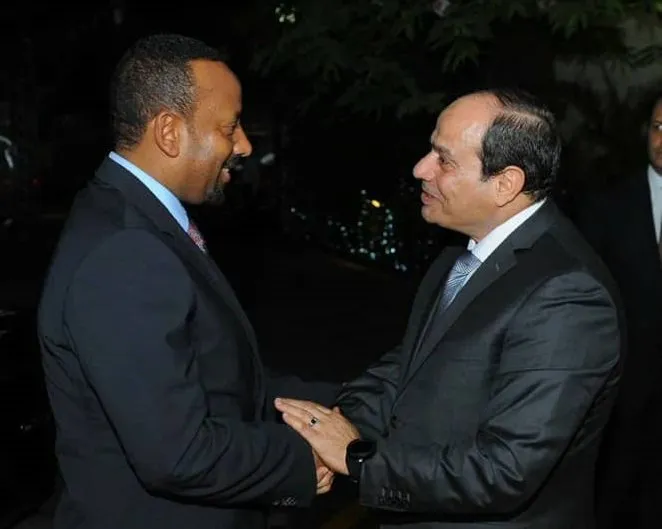
Cairo and Addis Ababa are escalating their diplomatic standoff against the backdrop of the dispute over the Grand Ethiopian Renaissance Dam (GERD) and shifting power dynamics in the Horn of Africa.
The dispute got to a head in early October with the reciprocal expulsion of diplomats as Addis Ababa accused Cairo of backing armed groups fighting to bring down the federal authorities.
Egypt categorically rejects these accusations, asserting that it plays no role in Ethiopia’s internal tensions. This latest development comes as bilateral relations remain dominated by the issue of the GERD.
On October 1, Addis Ababa declared a member of the Egyptian embassy *persona non grata* and gave them 48 hours to leave the country. Cairo responded with a similar measure targeting a diplomat at the Ethiopian embassy in Egypt.
The crisis simultaneously widened with Ethiopia’s decision to close its embassy in Asmara and expel ten Eritrean diplomats, followed by Eritrea’s announcement that it was severing diplomatic ties with Addis Ababa.
This series of decisions reflects a worrying deterioration of the diplomatic climate in the Horn of Africa.
However, the water dispute remains the primary point of friction between Cairo and Addis Ababa.
Egyptian authorities fear that the operation of the dam – and potential future water infrastructure projects – will reduce their safety margin regarding Nile water resources, particularly during periods of drought.
Consequently, Cairo continues to demand a legally binding agreement on the filling and operation of the dam.
The crisis is taking on a regional dimension as Egypt, Eritrea, Sudan, and Somalia move closer together.
Meeting in El Alamein on October 4, their leaders reaffirmed the principles of sovereignty, territorial integrity, non-interference, and respect for international law.
Their joint statement also emphasizes the need to preserve Egypt and Sudan’s current water usage from the Nile and rejects any unilateral measures that might affect it.
The current escalation primarily highlights the fragility of mechanisms for resolving disputes. While diplomatic reciprocity allows for a response to expulsions, it resolves neither the Nile issue nor the security disputes proliferating across the region.
The African Union has called on the parties to exercise restraint and maintain dialogue. The main risk now lies in a downward spiral where internal crises, regional rivalries, and the water dispute could reinforce one another.
MK/AK/Sf/fss/as/APA