





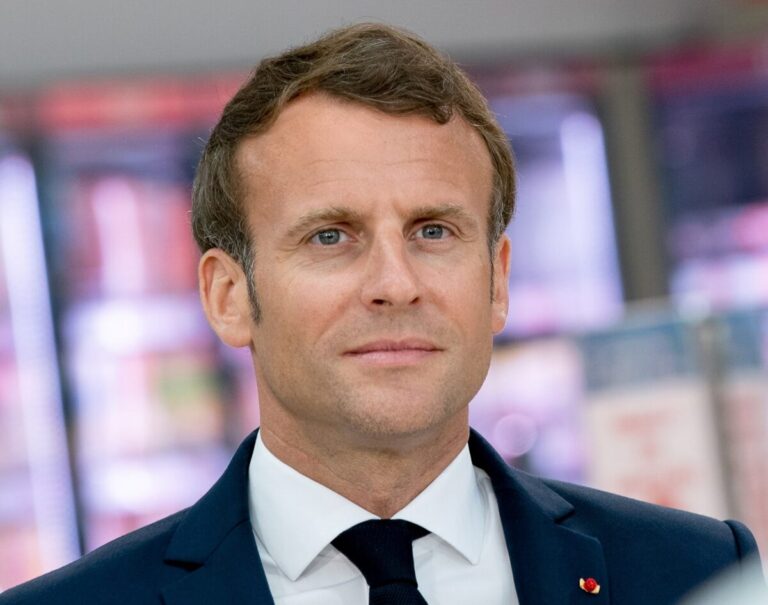
The Africa Forward Summit, also known as the Africa-France Summit, kicked off on Monday in the Kenyan capital Nairobi, bringing together more than 30 African leaders and French President Emmanuel Macron.
The Africa Forward Summit is the first France has organised in an English-speaking nation and follows a series of setbacks in West Africa where some Francophone leaders have cut back on security and commercial links with their previous colonial ruler.
The summit seeks to showcase Africa’s innovation potential, climate action, intra-African trade and youth empowerment as well as strengthening partnership built on multilateralism and mutually beneficial cooperation.
Ahead of the summit, Kenya and France signed 11 agreements aimed at deepening cooperation across strategic sectors.
This followed bilateral talks between President William Ruto and President Emmanuel Macron of France.
According to the talking points issued by the Quai d’Orsay, the new relationships that France wishes to foster with Africa will focus on sport, culture, youth and investment, marking another turning point in French policy towards the continent.
The summit comes about a year the withdrawal of French troops from West Africa amid Paris’ waning regional influence in recent years.
Since the independence of its former African colonies, France had maintained a policy of economic, political and military sway dubbed FrançAfrique, which included keeping thousands of troops in the region.
But leaders in those countries – and opposition figures – have often criticised France over what they described as a demeaning and heavy-handed approach to the continent.
Macron’s host, Kenyan President William Ruto, said both leaders expect the summit to be a “turning point” toward a better partnership.
Macron commented on the changing geopolitical landscape, saying France can “disagree” with West African governments but “never disagrees with the people.”
Kenya’s opposition leader Kalonzo Musyoka slammed the choice of Kenya as a venue, describing it as a country where democracy remains under threat.
“There will be an air of pretence that we are a cohesive nation,” Musyoka said. “We know that is far from the truth.”
MG/jn/APA