





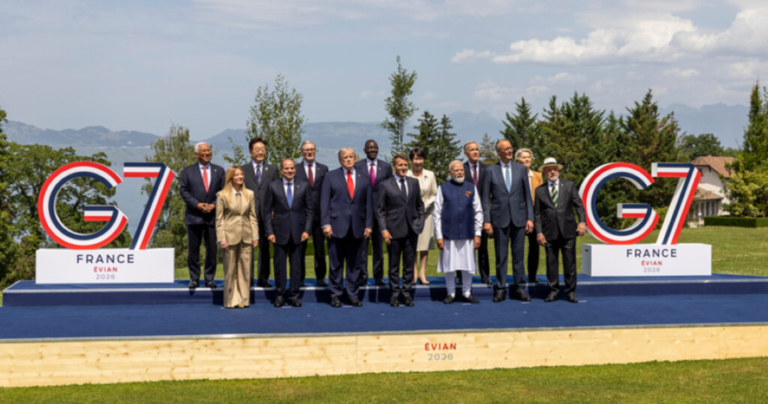
G7 leaders, backed by Brazil, South Korea, and Kenya, have adopted a joint declaration aimed at intensifying the fight against international drug trafficking.
The campaign will have a specific focus on port security, combating money laundering, and dismantling transnational criminal networks.
Meeting at the G7 summit in Évian, heads of state and government from the world’s leading industrialised economies signaled their determination to crack down on global narcotics trafficking, which they view as a growing threat to security, economic stability, and democratic institutions.
In a statement released Wednesday, G7 leaders highlighted that the expansion of drug trafficking is being fueled by record production levels, the high adaptability of organized crime groups, and rising global demand.
The signatories noted that these transnational criminal networks exploit loopholes in the international system, fuel corruption, violence, and illicit financial flows, while systematically undermining public institutions.
Among the announced measures is the creation of a “G7+ Ports Network against Drug Trafficking,” designed to enhance cooperation between major maritime ports in member states and partner nations. Leaders acknowledged that maritime transport remains the primary vector for the global smuggling of illicit drugs and chemical precursors.
This network is intended to improve information sharing, operational coordination, and the dissemination of best practices in port security. Relevant ministers have been tasked with making the network fully operational by November 2026.
The G7 also plans to tackle the infiltration of public and private institutions by criminal organisations. Leaders have mandated their ministers to develop a comprehensive action plan before November to counter the influence of drug trafficking networks within government administrations and private corporations.
The declaration further outlines a reinforcement of cooperation with international and regional partners to combat the production, transit, and consumption of narcotics. Specifically, the signatories back the development of national drug observatories and early warning systems to better track trafficking trends and the emergence of new substances.
In addition, G7 leaders welcomed the Regional Security Conference in the Caribbean, held in Martinique, and urged participants to take ambitious measures against drug and arms trafficking syndicates.
The text also emphasises reducing drug demand through prevention, treatment, and harm reduction policies, while raising public awareness about the emerging threats posed by synthetic substances.
Finally, G7 countries committed to intensifying the crackdown on illicit financial flows tied to the drug trade, including money laundering, terrorism financing, corruption, and other forms of transnational organised crime. They plan to strengthen financial investigations to identify, freeze, seize, and confiscate assets derived from these criminal activities, including virtual assets.
The declaration also received formal backing from Brazil, South Korea, and Kenya, who participated in discussions on the sidelines of the summit.
AC/lb/as/APA