



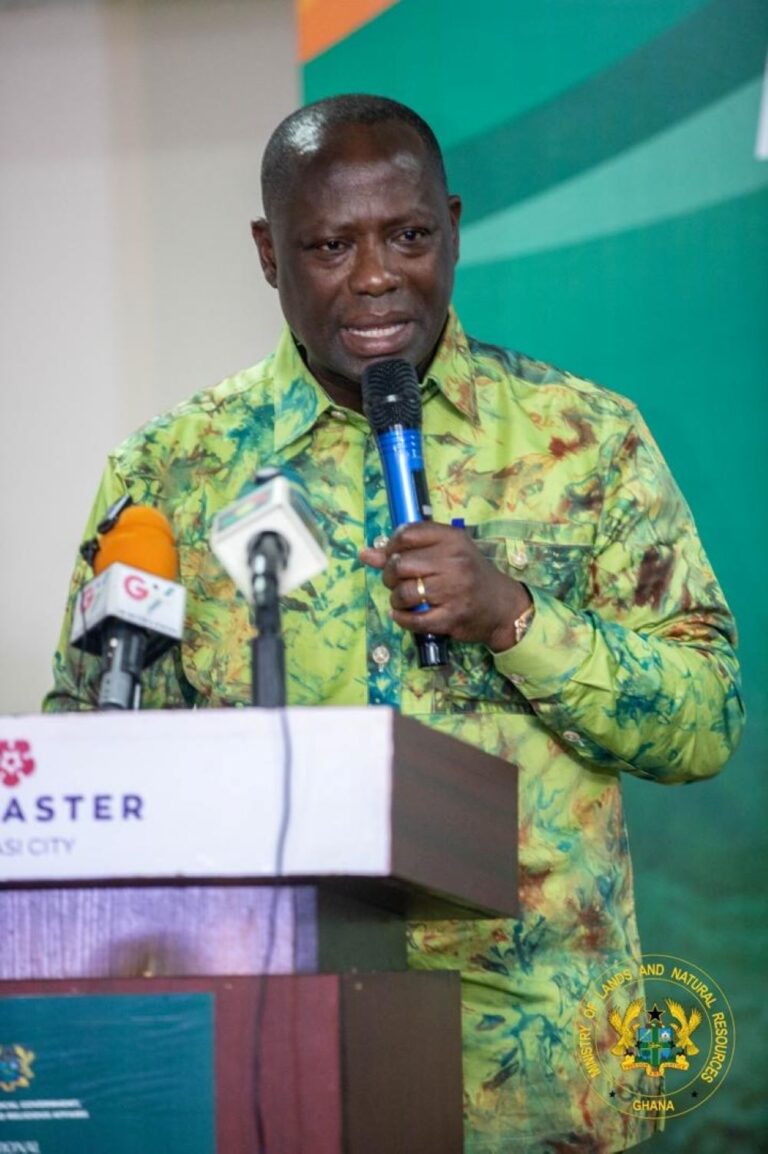
The first National Conference For Metropolitan Municipal and District Chief Executives (MMDCE’s) on illegal Small-scale Mining opened in Ghana on Monday with a resolve by the government to leave no stone unturned in the fight against illegal mining.
The conference was necessitated by the destruction of water bodies and forest reserves across the country over the past few decades.
As part of efforts to reverse this environmental degradation, the government said it would take corrective measures against the practice and restore sanity in the mining sector.
The conference was held in Kumasi, capital of the Ashanti Region where mining predominantly shoulders the local and regional economy and remains the occupation of many people.
The Ashanti Regional Minister, Dr. Frank Amoakohene described the conference as timely and will truly speak to the hearts of all stakeholders and participants. He said the courage being displayed by the administration of President John Dramani Mahama in the fight against illegal mining cannot be overstated.
The Minister for Lands and Natural Resources, Emmanuel Armah-Kofi Buah, explained the consequences of illegal mining in the country following many years of damage caused to the environment.
He appealed to all MMDCE’s to make the fight against illegal mining a collective responsibility. “We have gathered here this morning at this conference to discuss one critical sector of our mining industry, thus illegal mining”, he noted.
The meeting, he underscores, is not merely an administrative gathering but a call to collective responsibility and decisive action.
The minister said it is worth noting that the fight against illegal mining cannot be won by the Ministry of Lands and Natural Resources or security agencies alone.
It requires leadership, commitment, courage and sustained engagement with the good people of Ghana.
He also pointed out iIlegal mining has become a serious national security threat, a major concern to all because of its devastating consequences for the environment, public health, food security, water resources and local economies.
The minister further stressed that the Anti-Illegal Mining Operations Secretariat, the Ghana Police Service, the Ghana Armed Forces and other authorised security institutions remain important partners in national enforcement efforts. “Enforcement operations must be supported by effective local governance. When NAIMOS conducts operations in a district, the Assembly must be prepared to assist with local information, logistical coordination within its lawful capacity, community engagement and follow-up monitoring”, he said.
He explained that, where cooperative mining or other approved arrangements are available, Assemblies should help communicate the opportunities and requirements to interested communities, he said.
Buah proposed that every mining-affected Assembly should establish or strengthen a district-level anti-illegal-mining coordination mechanism involving the relevant decentralised departments, regulatory bodies, security agencies and community representatives.
“History will remember whether we protected our rivers or allowed them to be destroyed, whether we preserved our forests or watched them disappear, and whether we safeguarded the interests of future generations or sacrificed them for immediate gains”, he added.
WN/as/APA