





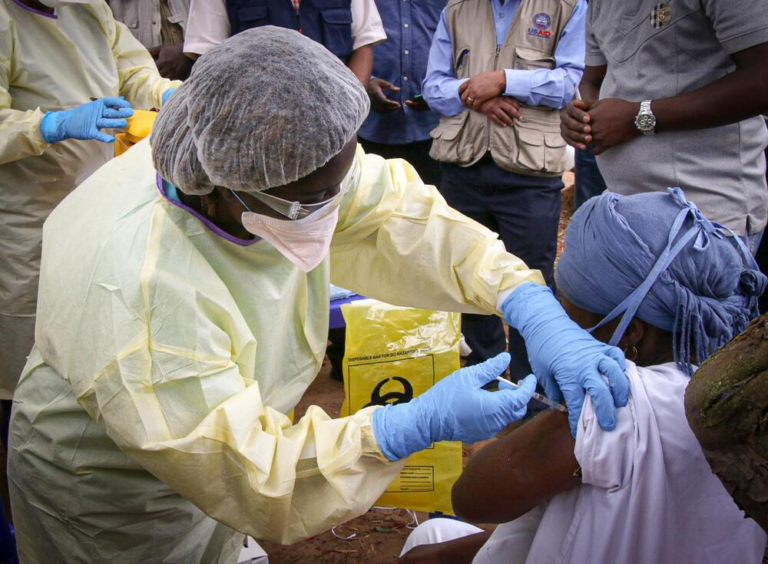
African health authorities and several international research centers are accelerating efforts to develop vaccines targeting the rare Bundibugyo strain of the Ebola virus, which has triggered a new outbreak across the Democratic Republic of the Congo (DRC) and Uganda.
This specific variant is causing growing concern within the global scientific community because no approved vaccine currently exists to provide targeted protection against it. Unlike the Zaire variant—which has been responsible for the deadliest Ebola outbreaks on the continent—the Bundibugyo strain remains relatively under-researched despite its highly dangerous nature.
In response to the threat, the Director of the Africa Centres for Disease Control and Prevention (Africa CDC) announced that a viable vaccine could become available by the end of 2026 if ongoing research proves successful. The World Health Organization (WHO) has similarly confirmed that several experimental vaccine candidates are currently under development as part of an international scientific mobilization. Among the most promising leads is the “rVSV-Bundibugyo” vaccine, with clinical trials projected to begin within the next seven to nine months. Another prominent candidate, known as “ChAdOx1-Bundibugyo,” utilizes a viral vector technology similar to that employed in certain COVID-19 vaccines and may enter human trials in the coming months.
Concurrently, Russia has claimed to have developed its own vaccine candidate capable of targeting the new strain. Russian Health Minister Mikhail Murashko stated that the project builds on research conducted during the major West African Ebola outbreak between 2014 and 2016. Independent experts believe this vaccine is likely derived from the “GamEvac-Combi” program developed by the Gamaleya Institute, which has already been deployed in Russia against the Zaire strain. While Moscow maintains that its existing technologies can be rapidly adapted to fight the Bundibugyo variant, many international scientists are urging caution. The globally approved “Ervebo” vaccine primarily protects against the Zaire strain, and its effectiveness against Bundibugyo has not been established. Furthermore, no published clinical study has yet confirmed the efficacy of the Russian candidate against this specific variant.
Meanwhile, the health situation remains deeply worrying along the volatile border areas separating eastern DRC and western Uganda. Continuous population movements, persistent regional insecurity linked to armed groups, and fragile healthcare infrastructure heavily complicate surveillance and emergency response operations. The WHO has officially classified the national risk level in the DRC as “very high,” prompting neighboring countries to aggressively strengthen their health monitoring measures. International medical teams have already deployed to the affected zones to intensify screening, execute contact tracing, and launch public awareness campaigns among local communities.
First identified in Uganda in 2007, the Bundibugyo strain exhibits a lower fatality rate than the Zaire strain but remains highly dangerous, causing severe fever, muscle pain, vomiting, diarrhea, and, in the most serious cases, internal and external bleeding. Amid rising fears of a wider regional spread, African health authorities are calling for a substantial increase in international financial support to accelerate vaccine research and head off another major health crisis. According to the latest figures relayed by the WHO and international health agencies, the ongoing outbreak in the DRC and Uganda has already resulted in more than 1,000 suspected cases and at least 223 suspected deaths in the DRC alone.
TE/lb/abj/APA