



Guinea-Bissau’s political instability has once again escalated following a military coup on Wednesday that ousted President Umaro Sissoco Embalo.
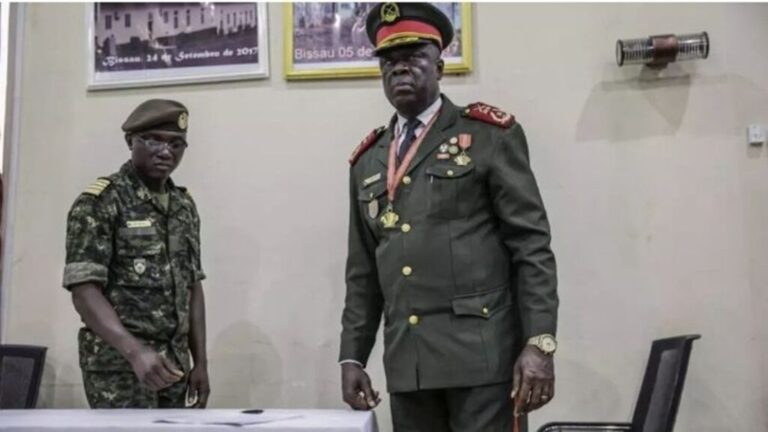
In a swift move to consolidate power, General Horta N’Tam, the army chief of staff, was sworn in on Thursday as the head of the newly established transitional body.
General N’Tam now assumes leadership of the High Military Council for the Restoration of National Security and Public Order, a structure created immediately after the coup. Until this announcement, General Dinis N’Tchama, the head of the presidential military household, had been the public spokesperson for the seizing military group. The elevation of General N’Tam confirms the true figurehead behind this latest unconstitutional change of government in the perpetually volatile West African nation.
The coup took place on Wednesday, November 26, mere hours before the expected announcement of the results of the presidential election held on November 23. The military intervened, arresting President Umaro Sissoco Embalo, the former army chief of staff, and the interior minister, effectively aborting the electoral process.
General N’Tchama justified the coup by claiming the military had uncovered a destabilization plot involving politicians in collusion with drug lords.
The military action unfolded amidst rising post-election tensions. Opposition leader Fernando Dias da Costa had claimed victory in the first round and urged the military to withdraw from the electoral process. His main ally, Domingos Simões Pereira, who had been barred from participating in the election, was reportedly arrested on Wednesday in connection with the events.
The coup has drawn swift and strong condemnation from the international community. Regional and continental bodies, including the African Union (AU) and the Economic Community of West African States (ECOWAS), alongside Nigeria, strongly denounced the unconstitutional change of government. They demanded the immediate restoration of constitutional order and the release of all detained officials.
This condemnation comes despite election observation missions from the AU, ECOWAS, and the West African Elders Forum having previously noted the orderly and peaceful conduct of the November 23rd elections, commending the civic engagement of the Guinean people.
Nigeria, calling the coup a flagrant violation of the ECOWAS Protocol on Democracy and Good Governance, warned that those responsible will be held accountable. Abuja pledged to work with its regional partners to take all necessary measures to ensure a swift return to normalcy.
This latest coup is the most recent event in Guinea-Bissau’s history of chronic political instability since achieving independence in 1974, a period marked by numerous military takeovers.
AC/fss/abj/APA