



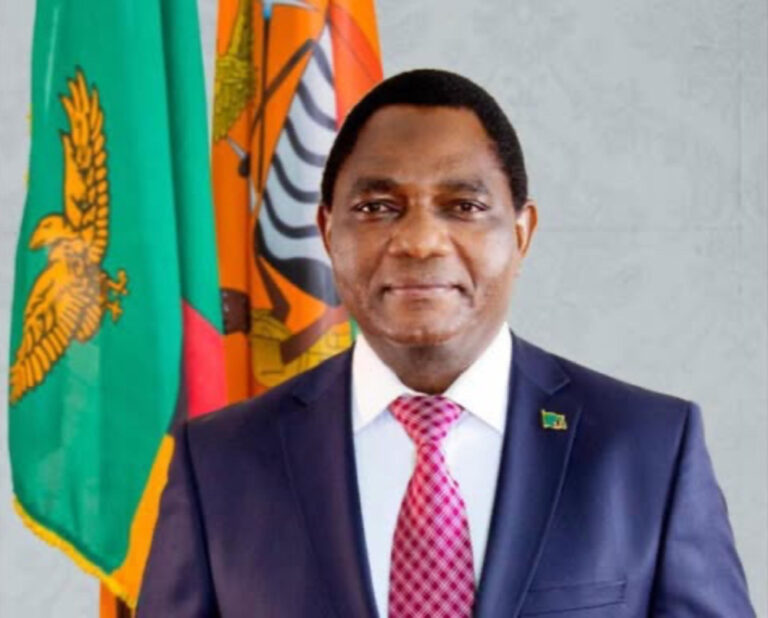
Zambian President Hakainde Hichilema is set to take centre stage at the 2026 Africa Mining Indaba in Cape Town on Monday where he will deliver the keynote address and make a direct pitch for fresh investment to fuel job creation and economic growth.
Presidential spokesperson Clayson Hamasaka said Hichilema will use the platform – Africa’s largest mining investment gathering – to position Zambia as a “partner of choice.”
“President Hichilema will make the case directly that Zambia is open for business, Zambia delivers on its commitments and Zambia is the partner of choice for responsible mining investment in Africa,” Hamasaka said.
The president, who arrived in Cape Town on Sunday, said his mission is to secure capital that translates into jobs not only in mining but across supply chains, transport, and local enterprise.
“Our mission is clear; to secure more investment into our country that will create more jobs for Zambians,” Hichilema said late Sunday.
His appearance comes as Zambia’s mining sector shows its strongest signs of recovery in years, with copper output rising and previously distressed operations returning to life.
Zambia’s renewed confidence is underpinned by a notable rebound in copper production.
Output reached 890,346 metric tonnes in 2025, an eight‑percent increase from 2024 and the country’s highest in years.
The surge follows a series of reforms introduced since 2021 aimed at stabilising the sector, improving regulatory certainty and restoring investor trust.
Major projects are reinforcing that momentum.
First Quantum Minerals’ US$1.25 billion expansion at Kansanshi – commissioned by Hichilema in August 2025 – has extended the mine’s life by two decades and secured thousands of jobs.
Mines that had been previously closing or shedding workers, including Mopani and Konkola Copper Mines, have resumed operations, hiring and reinvesting.
Government has set an ambitious target of three million tonnes of annual copper production, arguing that reaching it would expand employment opportunities for young people, boost tax revenues for public services and deepen local participation in the mining value chain.
JN/APA