





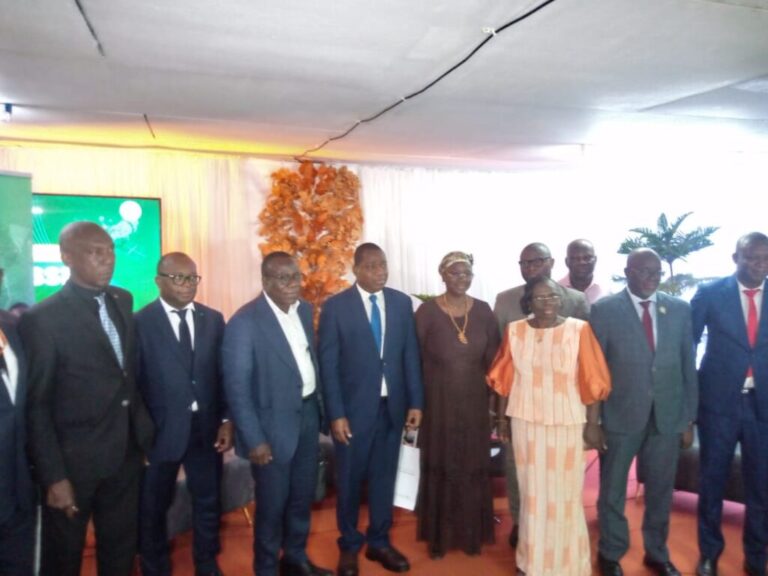
Côte d’Ivoire is moving to formalize and regulate the profession of geomatics with the establishment of the National Council of Geomatics Experts and Professionals (CNEP-GEO).
This key initiative, spearheaded by the National Committee for Remote Sensing and Geographic Information (CNTIG), aims to create an institutional body for the optimal management and strategic planning of the national territory.
The project leaders at the CNTIG, headed by Dr. Edouard Fonh-Gbei, observed that while geomatics—the science of managing spatially referenced data—has seen significant growth since the 1990s, it currently lacks an official institutional framework in Côte d’Ivoire.
Unlike established regulated professions such as surveyors, architects, or urban planners, geomatics has yet to receive official state recognition. This gap led Dr. Édouard Fonh-Gbei to express the urgent need to structure and formalize the field.
“Professionals and experts, feeling the need for structure, have expressed a desire to formalize their organization,” Dr. Fonh-Gbei stated.
The forthcoming CNEP-GEO will be tasked with three primary functions: Structuring the profession. Regulating its practice according to ethical and technical standards. Strengthening the national governance of geospatial data.
Dr. Fonh-Gbei, the Director General of the CNTIG, emphasized that the Council will guarantee scientific rigor, encourage the sharing of expertise, and serve as a catalyst for the digital transformation of the country. Given the cross-cutting nature of geomatics, he called for the mobilization of all stakeholders to build a “strong, responsible, and excellence-oriented community.”
To rapidly move the process forward, a multidisciplinary working group was established on Wednesday, November 12, 2025, by the CNTIG. This group is specifically tasked with considering and drafting the founding documents for the CNEP-GEO.
The group brings together experts from the public, private, and academic sectors, alongside legal professionals and representatives of existing professional associations. Their main tasks include drafting a diagnostic report and the Council’s legal texts, developing a code of ethics and defining membership criteria.
Six thematic subcommittees have been identified to conduct this preparatory work, covering key areas such as communication and advocacy, consultation and diagnostic, and ethics and professional standards.
AP/fss/abj/APA