





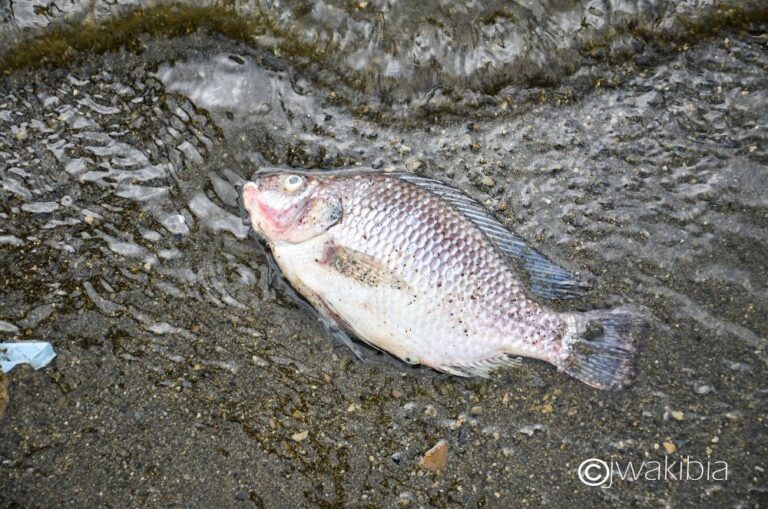
The Kenya Wildlife Service (KWS) has flagged the large quantities of contaminated fish unfit for human consumption being distributed across the country.
KWS Director General Erustus Kanga Tuesday said that fish from lake Nakuru may be contaminated due to pollution and environmental changes affecting the water body, which lies within Lake Nakuru National Park.
Kanga said large quantities of fish are leaving Lake Nakuru and finding their way into markets, particularly in urban centres such as Nairobi.
“A lot of fish are leaving Nakuru and getting distributed across the country. What you are listening to is a description of a national health crisis in this country. People are taking fish that have been declared unfit for human consumption, and they are being freely distributed. We are killing Kenyans. Anyone consuming tilapia in this country, unless it is labelled that it is from Lake Victoria, should be wary that it could be coming from Lake Nakuru,” Kanga warned.
He pointed out that the lake has in recent years experienced ecological stress linked to urban runoff, industrial waste, and fluctuating water levels—factors that can affect fish safety and quality.
According to the KWS boss, the situation has been exacerbated by the expansion of the lake, which has pushed water into surrounding areas, making it easier for locals to access and harvest fish, including from their own homesteads.
He emphasised that the fishing and sale of such fish is illegal and urged the public to avoid consuming seafood sourced from the lake until further scientific assessments are completed.
The warning has sparked concern among residents and traders who rely on fishing activities around the lake for their livelihoods.
Kanga warned that the unfit fish could expose consumers to diseases, including cancer.
KWS is now working with other government agencies to monitor the situation and enforce regulations aimed at protecting public health and conserving the fragile ecosystem.
Kanga has now called on the Senate to urgently investigate the matter and take action to protect public health.
MG/as/APA