





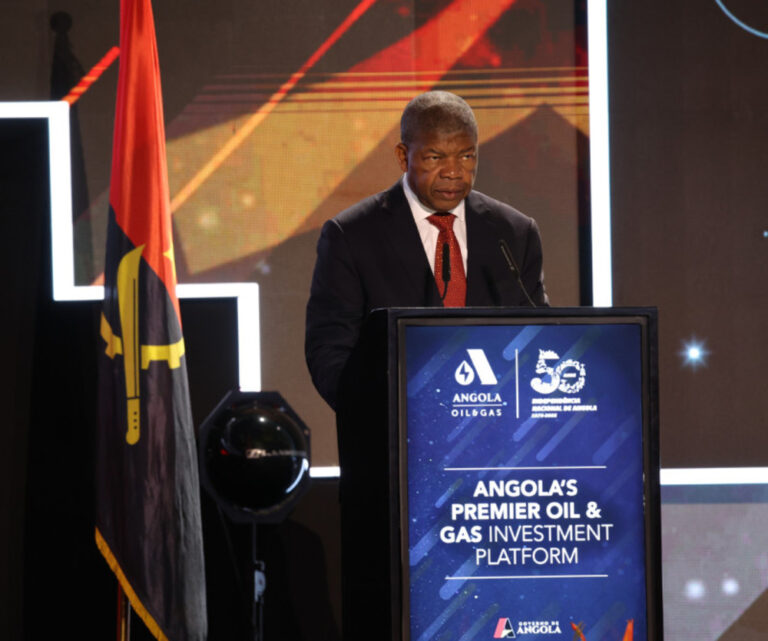
Angolan President João Lourenço called on the country to leverage its vast oil and gas resources to drive long-term economic transformation as he opened the 2025 edition of the Angola Oil & Gas (AOG) conference in Luanda on Wednesday.
Lourenço underscored the role oil and gas development has played in the country’s transformation since independence in 1975 and emphasised that these resources “will continue to strengthen the Angolan economy for years to come.”
“The oil sector has been instrumental for the growth of our country. Exploration and production of natural resources has contributed to the improvement of the living conditions of the people of Angola,” he said.
He called for stronger cooperation between international investors and local partners, saying “Angola provides investment conditions that ensure contract, stability, legal certainty and investment durability.”
“Cooperation between private and public sector, between international companies and local partners, will be key for achieving our aspirations,” Lourenço said.
The AOG 2025 conference comes amid a wave of industry milestones.
Angola has recently launched upstream production at the Agogo FPSO, Begonia oilfield, and CLOV Phase 3 developments.
A new gas discovery was made at Block 1/14 in the Lower Congo Basin, while exploration campaigns have expanded across nearly all onshore and offshore basins.
“Our current actions are directed towards mitigating production decline and keeping output above one million barrels per day,” Mineral Resources, Petroleum and Gas Minister Diamantino Azevedo said during the conference.
He highlighted ongoing developments in Blocks 17 and 17/06, as well as the Kaminho project, as key to sustaining output.
On the downstream front, Angola began operations at the Cabinda Refinery on 1 September, adding 30,000 barrels per day in its first phase, with plans to double capacity.
The facility is expected to reduce refined fuel imports and strengthen national energy security. Additional projects include the Lobito refinery and feasibility studies for the Soyo plant.
Azevedo also announced legislative reforms to enhance local participation in the oil and gas sector, positioning Angola as a regional energy hub.
“The commitment is to widen partnerships and create value for the people of Angola,” he said.
The AOG conference serves as a strategic platform for dealmaking and policy dialogue, with stakeholders exploring how Angola’s hydrocarbon wealth can be harnessed to balance economic growth, social equity and environmental stewardship over the next 50 years.
JN/APA