



Mali has endured a week of unprecedented security challenges following a series of coordinated strikes that began in the early hours of Saturday, April 25, 2026.
The initial explosions, which were heard around 5:30 a.m., signaled the start of a large-scale offensive targeting strategic sites in Bamako, Kati, Gao, Mopti, Sévaré, and Kidal. These simultaneous assaults employed a sophisticated range of tactics, including suicide vehicles, drone strikes, and direct attacks on high-profile locations such as the presidential residence, the Modibo Keïta International Airport, and the Ministry of Defence. The scale of the violence prompted immediate security alerts from international embassies and led to the temporary closure of the capital’s main airport as the government scrambled to assess the damage to the heart of the state.
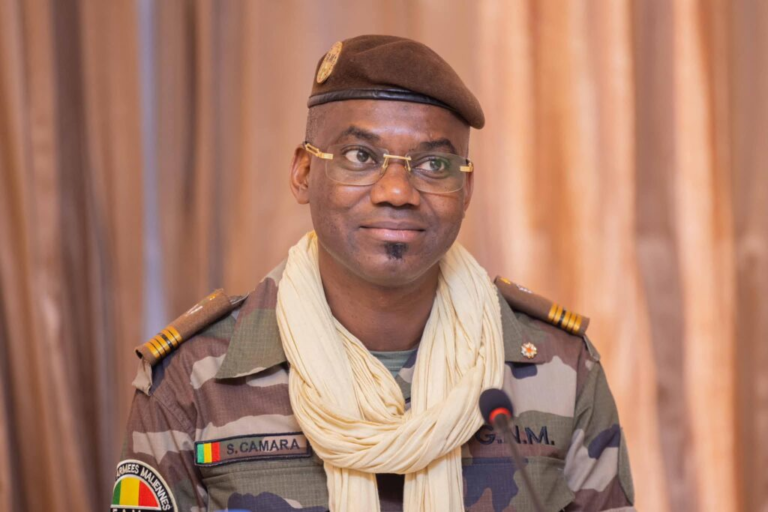
The crisis resulted in a major blow to the transitional leadership with the confirmed death of the Minister of State for Defence and Veterans, General Sadio Camara. Reports indicate that a suicide vehicle targeted his residence in Kati, where he was critically wounded during an engagement with attackers. General Camara was a pivotal figure in Mali’s security architecture and a primary architect of the country’s military cooperation with Russia. His loss coincides with a period of intense military activity, as the Malian General Staff and Russian-linked Africa Corps forces launched massive counter-offensives. While the Russian Defence Ministry claimed that up to 2,500 attackers were neutralized, the situation in the north remains delicate, particularly in Kidal, where a tactical repositioning of forces has been reported following joint decisions between Malian and Russian units.
In the aftermath of the violence, which was jointly claimed by groups including JNIM and the FLA, the Malian government has moved to consolidate control through emergency measures. A 72-hour curfew was imposed in Bamako, and travel restrictions were tightened in several other major hubs to facilitate ongoing clearance and intelligence operations. Prime Minister Abdoulaye Maïga and President Assimi Goïta have both addressed the nation, framing the attacks as a failed attempt to dismantle state institutions and seize power through a broader destabilization plan. Despite the significant human and institutional costs, the leadership has reaffirmed its commitment to national sovereignty and its strategic alliances within the Alliance of Sahel States, pledging support for victims while maintaining that the national security situation is now back under control.
MD/ac/lb/abj/APA