





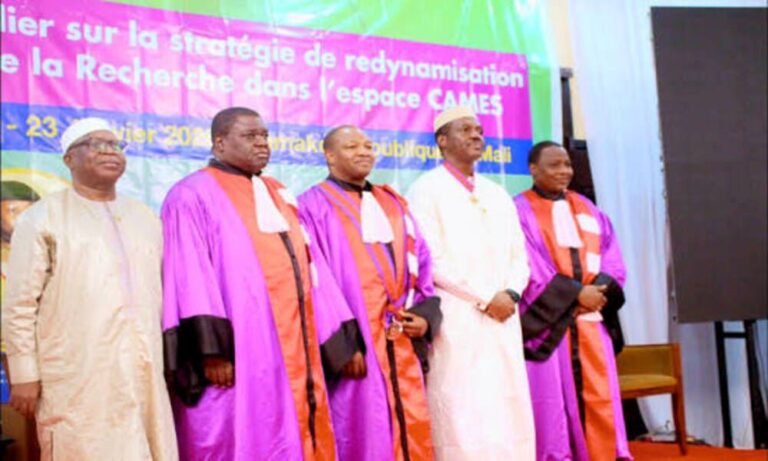
Meeting in Bamako on January 19, 2026, stakeholders in higher education opened a workshop dedicated to revitalising research within the CAMES region.
The meeting takes place against a backdrop of significant structural constraints impacting scientific output in Mali.
Under the chairmanship of Prime Minister Abdoulaye Maïga, the workshop, led by higher education stakeholders, opened in Bamako to discuss revitalising scientific research within the African and Malagasy Council for Higher Education (CAMES).
For one week, university officials, researchers, and technical partners are reviewing strategic documents intended to guide the organisation and conduct of research at the national and regional levels.
The workshop aims to harmonise the operational blueprints governing scientific research in an environment where Malian universities face persistent challenges related to funding, inadequate infrastructure, and the mobility of skilled professionals.
According to data from the Ministry of Higher Education, less than 10% of the national budget is allocated to higher education and research, a situation that limits the capacity of laboratories to produce consistent and competitive work.
Mali currently has several thousand teacher-researchers, a significant proportion of whom work without regular access to research funding or specialised equipment. This vulnerability contributes to a slowdown in scientific publications and the underrepresentation of Malian universities in international rankings and research programs.
Within the CAMES region, which comprises more than twenty African countries, the issue of pooling scientific resources has become central to this cause.
The authorities believe that regional coordination can strengthen academic evaluation, the recognition of degrees, and scientific mobility, while supporting the production of knowledge adapted to African realities.
At the opening of the workshop, the PM emphasised that research is a strategic lever for developing public policies, particularly in the areas of health, agriculture, the environment, and governance.
Discourses also focused on leveraging scientific findings, which are often underutilised in decision-making processes.
The workshop’s expected conclusions should lead to operational guidelines aimed at strengthening research, stabilising academic careers, and integrating Mali into regional scientific dynamics, in a context where knowledge is becoming a strategic imperative.
MD/Sf/fss/as/APA