



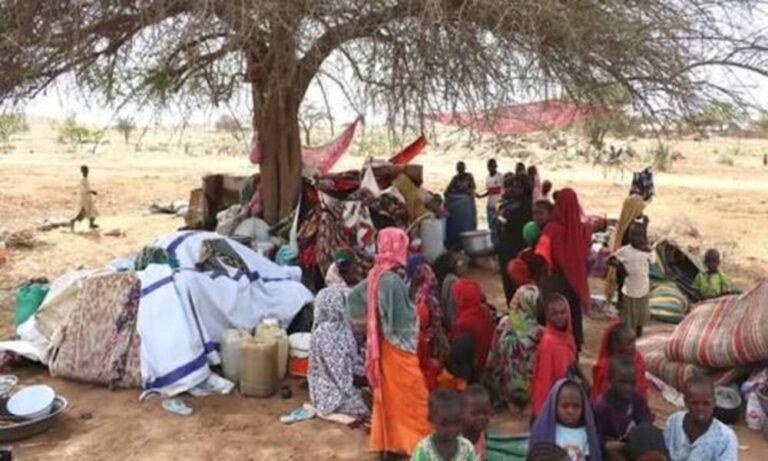
Faced with the massive influx of refugees fleeing the war in Sudan, the United Nations High Commissioner for
Refugees (UNHCR) and the Chadian government have launched a joint appeal to the international community for increased and sustained support.
On an official visit to Chad from January 13 to 16, UNHCR High Commissioner Barham Salih commended the country’s asylum policy, which keeps its borders open despite limited capacity.
Received by President Mahamat Idriss Deby Itno and several members of the government, he reaffirmed the UN’s commitment to supporting the Chadian authorities in protecting refugees and assisting host communities.
Since April 2023, more than 900,000 Sudanese refugees have sought refuge in Chad, primarily in the Wadi Fira and Ouaddai provinces. In the east of the country, where one in three people is now a refugee, the pressure on essential services is considerable. Access to water, shelter, healthcare, education, and psychosocial support remains severely compromised due to a chronic lack of funding.
During visits to Adré, Farchana, Iriba, and Abeche, the UN and government delegation met with recently arrived families, often exposed to extreme violence and repeated displacement.
“Chad’s solidarity saves lives, but it cannot be sustained without a strong, predictable, and consistent international commitment,” said Barham Salih in a statement released on January 19, 2026, by UNHCR.
Despite the challenges, inclusive initiatives are beginning to yield results, including the integration of skilled refugees – teachers, doctors, and lawyers – into national services, as well as the development of learning and vocational training centres, contributing to stronger social cohesion.
With over 1.5 million refugees and asylum seekers within its borders, Chad bears one of the heaviest burdens of
hosting refugees on the African continent.
This effort has been praised by the UN, which nevertheless believes that this responsibility cannot be sustained by a single country.
The appeal now aims to translate this demonstrated solidarity into concrete actions from international partners.
CA/Sf/fss/as/APA