



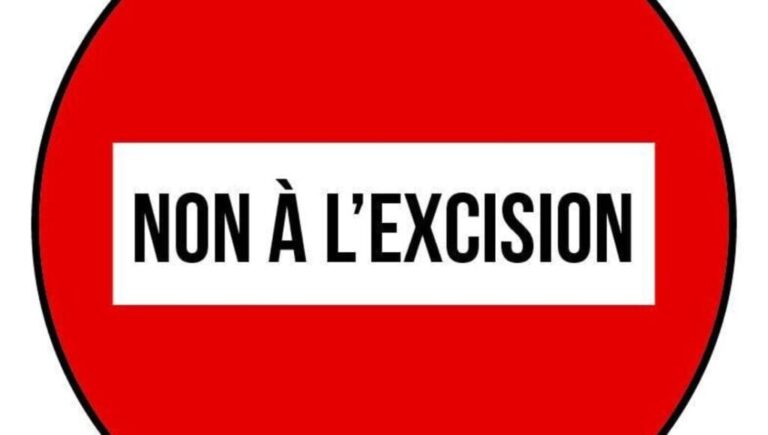
The National Human Rights Commission (CNDH) has called on Malian authorities to adopt specific legislation against female genital mutilation (FGM), following the dissemination on social media of messages supporting this practice, which remains widespread in the country.
In a statement on August 26, the CNDH considers FGM to be an attack on the physical, moral and psychological integrity, as well as the dignity, of women and girls.
The Commission, headed by its interim president, Aissata Foune Tembely, urges public authorities and civil society organizations to strengthen awareness and prevention efforts.
It bases its appeal on the Malian Constitution as well as several African and international instruments for the protection of the rights of women and children.
This stance comes after the dissemination, since mid-August, of posters supporting FGM on social media. Some visuals featured slogans such as “In Mali, yes to female genital mutilation” and “We want to protect it,” sparking reactions from associations, healthcare professionals, and women’s rights advocates.
The debate has also reached the scientific community. On August 26, the National Ethics Committee for Health and Life Sciences announced the cancellation of the authorization granted in June for a study on opinions regarding female genital mutilation in Bamako.
It called for a halt to the surveys, as well as the collection and processing of data, citing the “current context” and the need to consider different local sensitivities.
According to the 2023-2024 Mali Demographic and Health Survey, 88.6% of women aged 15 to 49 reported having undergone female genital mutilation.
This proportion is identical to that recorded in 2018, following 91.4% in 2012-2013 and 85.2% in 2006, reflecting an uneven trend and the absence of a significant decline at the national level.
Among girls aged 15 to 19, the prevalence remains high, at 86.5%. For girls under 15, the proportion reported by their mothers decreased from 74% in 2018 to 70% in 2023-2024.
However, this indicator does not allow for the establishment of the definitive prevalence, as some girls may still be subjected to female genital mutilation at a later age.
Regional disparities are particularly pronounced. The prevalence reaches 95.7% in Kayes, 95.2% in Koulikoro, 93.8% in Sikasso, and 91.7% in Bamako. In contrast, the prevalence is 11.7% in Timbuktu and only 0.5% in Gao. The survey does not provide comparable data for Kidal.
Furthermore, the practice retains significant social acceptance.
According to UNFPA, 48% of the women and men interviewed expressed support for its continuation. Studies conducted in Mali highlight the influence of family decisions, community pressure, and perceptions related to marriage.
Local initiatives, however, show that change remains possible. In 2025, 112 village communities reported having abandoned harmful practices, including female genital mutilation (FGM). Community monitoring mechanisms protected 335 girls, compared to 58 in 2024, according to the joint UNFPA-UNICEF programme.
Despite this progress, the joint programme ranks Mali among the countries that have not recorded any significant decrease in prevalence. It recommends an evaluation of interventions to better understand the reasons for their still limited impact on community practices.
From a legal standpoint, the new Penal Code, promulgated on December 13, 2024, has strengthened the prosecution of several forms of gender-based violence.
In particular, it provides for up to 10 years’ imprisonment when intentional assault and battery result in mutilation, amputation, or disability.
However, the text does not create a separate offense explicitly dedicated to female genital mutilation or excision. Their prosecution therefore falls under the general provisions relating to violence and attacks on physical integrity.
For the National Human Rights Commission and women’s rights advocates, the adoption of a specific law would, in particular, make it possible to clearly define the prohibited acts and the responsibilities of those who perform female genital mutilation, parents, intermediaries, or any healthcare professionals involved. It could also regulate the reporting of cases, the protection of exposed girls, and the medical and psychosocial care of survivors.
Mali is a party to the Convention on the Elimination of All Forms of Discrimination against Women and to the Maputo Protocol, Article 5 of which calls on States to prohibit harmful practices, including FGM.
In April 2021, women’s rights organisations filed a case against the Malian state with the ECOWAS Court of Justice. Initiated before Mali’s effective withdrawal from the regional organisation in January 2025, this case remains pending, according to the Institute for Human Rights and Development in Africa.
In July 2025, the same court condemned Sierra Leone for its inadequate protection against female genital mutilation and ordered it to adopt criminal legislation on the matter.
With its new appeal, the Malian National Human Rights Commission is calling on the authorities to act on two fronts: strengthening the legal framework to explicitly criminalize excision and intensifying awareness-raising efforts in communities where the practice remains deeply entrenched.
MD/te/fss/gik/APA