





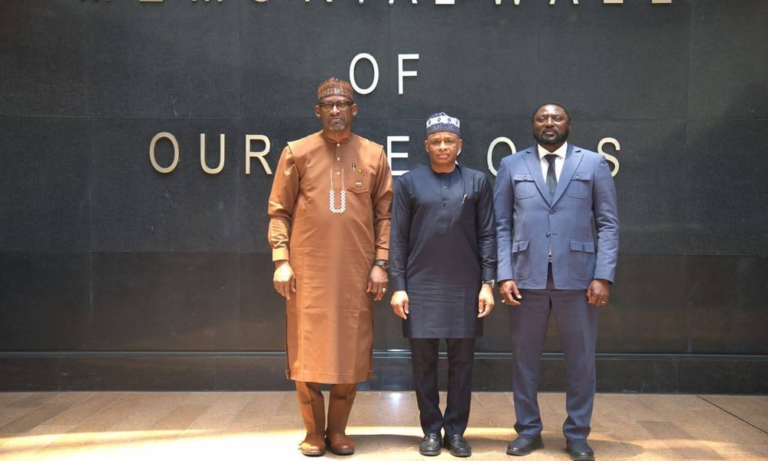
On May 14, 2026, Mali’s Minister of Foreign Affairs and International Cooperation, Abdoulaye Diop, held a significant informal consultation with the African Union Peace and Security Council (AU PSC).
Accompanied by the ambassadors of Burkina Faso and Niger—fellow members of the Alliance of Sahel States (AES)—Diop provided an in-depth briefing on the April 25 attacks. Bamako has characterized these events as a direct offensive against the transitional government’s highest authorities, allegedly involving the Azawad Liberation Front (FLA) in coordination with JNIM. This meeting follows a preliminary AU briefing in late April, where the Council reaffirmed its support for Mali’s territorial integrity while urging regional cooperation and renewed dialogue with ECOWAS.
The diplomatic context of these talks is defined by a notable paradox: Mali, Burkina Faso, and Niger all remain suspended from the African Union following military-led transitions in 2021, 2022, and 2023, respectively. Despite being institutionally sidelined, these nations remain the epicenter of the Sahel’s security crisis. Minister Diop utilized the consultation to highlight that the mobility of armed groups and the porous nature of regional borders necessitate operational coordination that transcends political suspensions. He called for a shift toward “concrete African solidarity,” urging neighboring states to end internal interference and rebuild the mutual trust required to combat a terrorist threat that does not respect institutional boundaries.
Mali’s current diplomatic strategy reflects a delicate balancing act. While the nation officially exited ECOWAS in early 2025 alongside its AES partners, Bamako is now signaling a more “constructive dynamic” with the regional organization. The Malian authorities are steadfast in defending their sovereignty and their commitment to the AES, yet they recognize the necessity of maintaining channels with the African Union to secure security assistance. For the AU, the challenge remains engaging with indispensable security partners who remain politically estranged from the organization’s constitutional norms. While the Malabo consultation did not resolve the underlying political fractures, it underscored a shared recognition that the severity of the Sahelian threat compels all parties to remain at the table.
MD/Sf/lb/abj/APA