





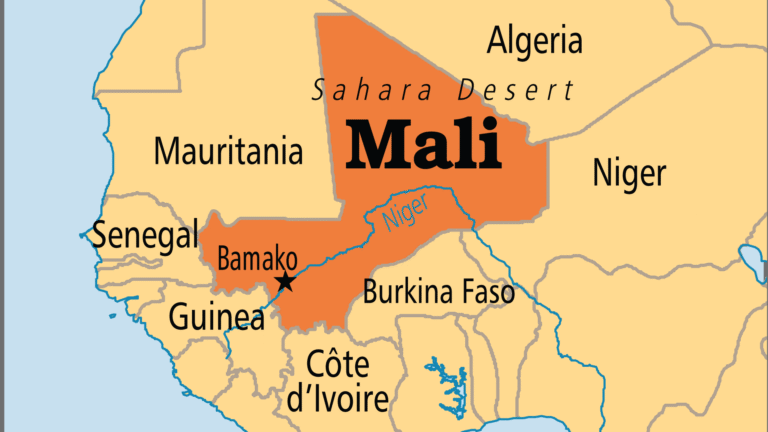
The Malian Armed Forces (FAMAs) reported that it suffered an attack on Sunday in the Kayes region, claimed by the JNIM.
In a statement released Sunday evening, the army indicated that its forces had been attacked by terrorists in the Kayes region, to which they responded vigorously. It specified that search operations were immediately launched in the area to find the perpetrators.
The message concluded with a call for vigilance among the population and a reaffirmation of the forces’ determination to secure the territory.
The incident occurred at midday between Lakamane and Kaniera, on the Kayes-Bamako road, as the convoy transporting fuel was advancing under military escort. Several videos released during the day showed tanker trucks going up in smoke between Kayes and Lakamane, confirming the scale of the attack. The Support Group for Islam and Muslims (JNIM), affiliated with Al-Qaeda in the Islamic Maghreb (AQIM), claimed responsibility a little earlier.
Security put to the test
Yet, a few days earlier, on September 10, the Malian Armed Forces (FAMa) had escorted several fuel tankers from Senegal without incident. The Directorate of Communications and Public Relations of the Armed Forces (Dirpa) praised the mission as accomplished without difficulty, with Lieutenant Mamadou Coulibaly calling on the
population to maintain their trust.
These escorts come amid intensified military operations in the Kayes region. On September 9, an airstrike in Mousafa, near Dioumara, eliminated several dozen fighters, while a reconnaissance mission in Lambatara resulted in the arrest of four suspects.
Strategic challenge for Bamako and Dakar
Colonel-Major Souleymane Dembele, army spokesman, recently warned that armed groups are now using new tactics, including drones, improvised explosive devices, and attacks targeting civilians, to disrupt traffic on the Bamako-Kayes axis.
This route is vital to the Malian economy. In 2024, Mali absorbed more than 802 billion CFA francs in Senegalese exports, representing more than half of Dakar’s sales to Africa and nearly 21 percent of its total exports.
AC/Sf/fss/as/APA