





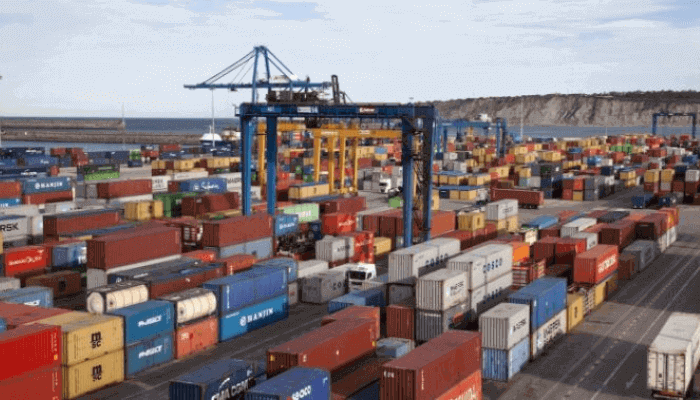
The Institute of Marine and Offshore Nigeria (IMION) has called on the Nigerian Ports Economic Regulatory Agency (NPERA) to deploy a port Single Window.
The Director-General, African Centre for Supply Chain Management, Dr. Obiora Madu, said at the closing of the three-day executive course in Lagos on logistics and trade facilitation, that regulators, customs, terminals and transport operators should operate through one seamless trade flow.
He said that policies should translate into practical action to improve safety, attract investment and enhance service delivery across ports and offshore operations.
Madu said that multiple agencies with legitimate mandates often create duplication, conflicting requirements, repeated inspections and unclear accountability.
According to him, such fragmentation increased the cost of doing business in Nigerian ports and undermined trade competitiveness.
Madu urged NPERA to resolve conflicts arising from overlapping mandates, stressing that “good laws produce bad outcomes without coordination”.
He added that traders deserve “one data submission and one inspection” to reduce delays and improve efficiency.
Madu called for clear Key Performance Indicators for agencies and users, with customer experience serving as the ultimate measure.
He said the indicators should track time, cost and predictability across port processes.
Madu advocated trade simplification through digitisation, transparent documentation and predictable cargo release.
He asked whether reforms had actually reduced trading time and costs for businesses operating across Nigeria’s ports.
Madu, however, warned that technology should “reduce friction, not digitise bureaucracy”, saying uncoordinated controls could worsen delays and increase costs.
He said additional controls without proper coordination could create opportunities for corruption and undermine the benefits of digitalisation.
Madu said that infrastructure alone could not move trade, as slow and fragmented procedures could erode value in spite of available ports, roads, railways and vessels.
In his contribution, Dr. Eugene Itua of the Africa Green Economy and Sustainability Initiative, said that sustainability and risk management should balance economic efficiency.
He said they must also promote environmental protection and social equity across blue economy logistics.
Itua said that Nigeria’s maritime competitiveness would depend on smarter compliance and stronger collaboration among government agencies.
He added that a skilled workforce would be essential to harness emerging opportunities in offshore operations and logistics.
He said trade facilitation should make legitimate trade faster, cheaper and more transparent without compromising regulatory requirements.
According to him, efficient trade processes would support growth, investment and improved cash flow for businesses.
The theme of the course was ‘Logistics and Trade Facilitation for Blue Economy Growth’.
GIK/APA